Clay vs Cast Iron Chiminea — Which Should You Buy?
Which is the best chiminea for you — clay or metal (cast iron)? It depends on how you use the fire.
Buy a clay chiminea if you want gentler, more even warmth, a handcrafted piece that never rusts, and you are willing to keep it dry and out of freezing weather. Buy a cast iron chiminea if you want an outdoor fireplace that can stay outside all year, shrug off knocks and big fires, and double as a grill. Neither is better across the board; each suits a different way of using fire.
We make clay chimineas, so we are on one side of this question. That is exactly why we will tell you plainly where cast iron wins.
How does the heat from clay and cast iron differ?
Cast iron heats up fast and radiates hard: you feel the warmth almost at once, but the body itself gets extremely hot and dangerous to touch. Clay warms more slowly; its thick walls take in the heat and give it back gradually and more evenly. Around a clay chiminea you sit at a comfortable distance in a steadier warmth. Keep in mind that clay gets hot too, and neither one should be touched while a fire is burning.
Which one lasts longer?
It depends on what it has to survive. Cast iron handles bumps, frost and large fires, but it rusts and needs periodic cleaning and a coat of high-heat paint. Clay never rusts, but it is ceramic: it dislikes thermal shock, water on a hot surface, freezing with moisture inside the material, and knocks while being moved. A properly cured clay chiminea, burned at a moderate size and stored under shelter in winter, will give you years of evenings. One left wet outside through a hard freeze can crack in a single season.
How much maintenance does each need?
- Clay: a few small curing fires before regular use (see how to cure a clay chiminea), a layer of sand in the base, the lid on between uses, and shelter or a cover in winter.
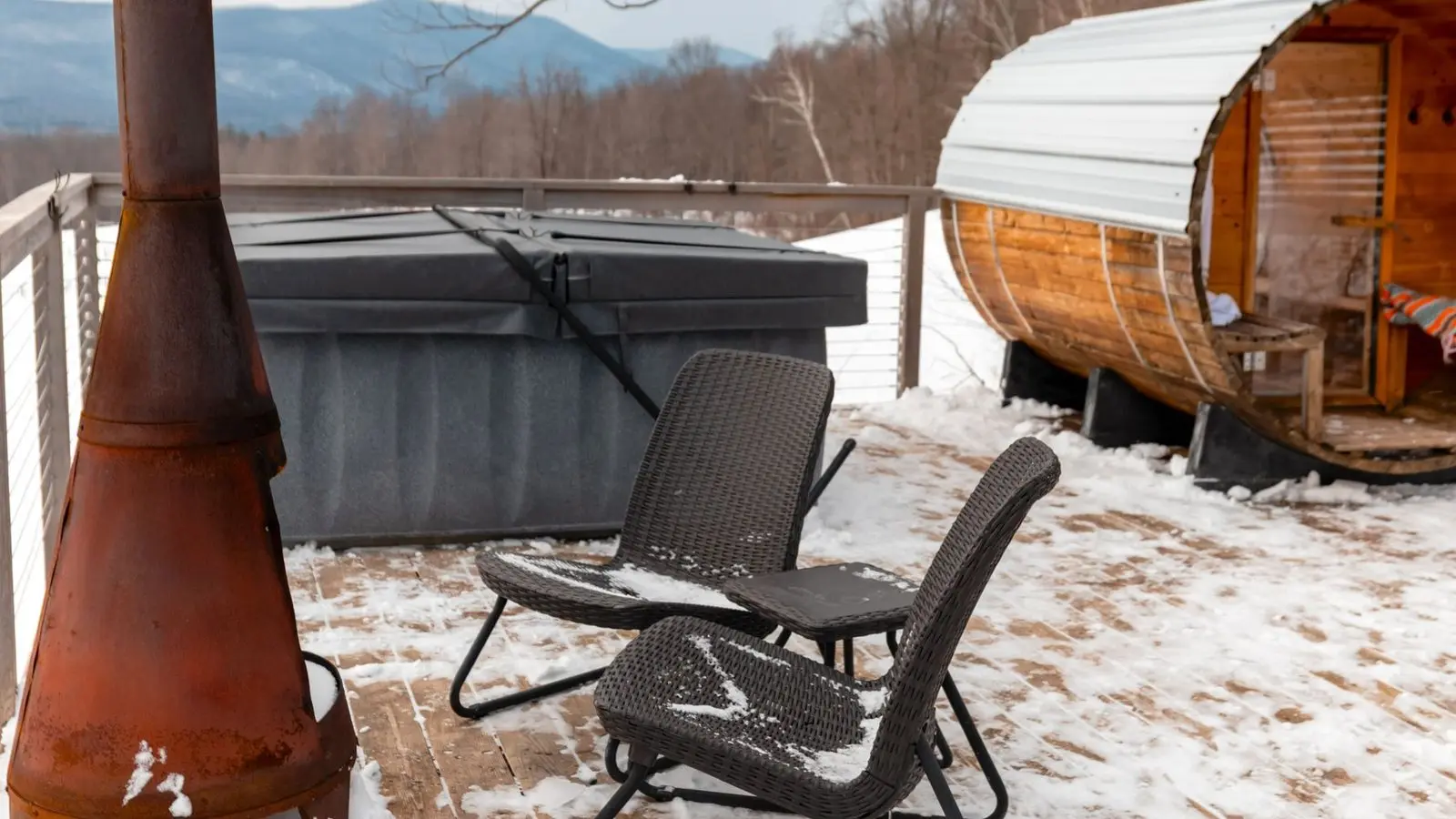
- Cast iron: a wire brush and high-heat paint whenever rust shows up; it can live outdoors year-round, but rust may stain the pavers underneath.
In short, clay asks you to watch moisture and fire size, while cast iron asks you to watch for rust. Neither is a chore, but they are different habits.
Which is easier to move around the patio?
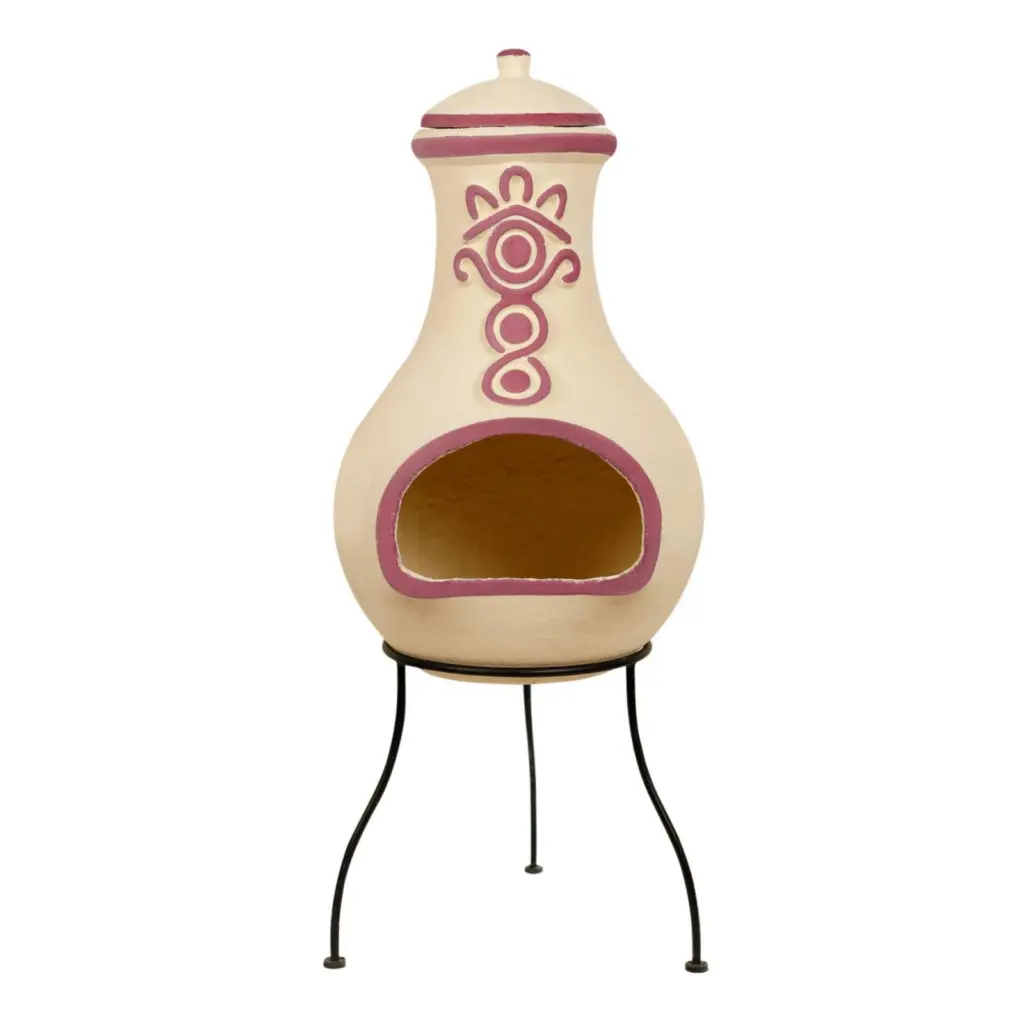
Cast iron is a dense, heavy material, and a cast iron chiminea of similar size usually weighs more and is hard for one person to move. Our clay chiminea stands 34 in (87 cm) tall on its tripod stand and weighs about 42 lbs (19 kg), so you can reposition it with the seasons or the wind. The one condition: move it only when it is completely cold, and lift it by the body, never by the chimney.
How do they look in a backyard?
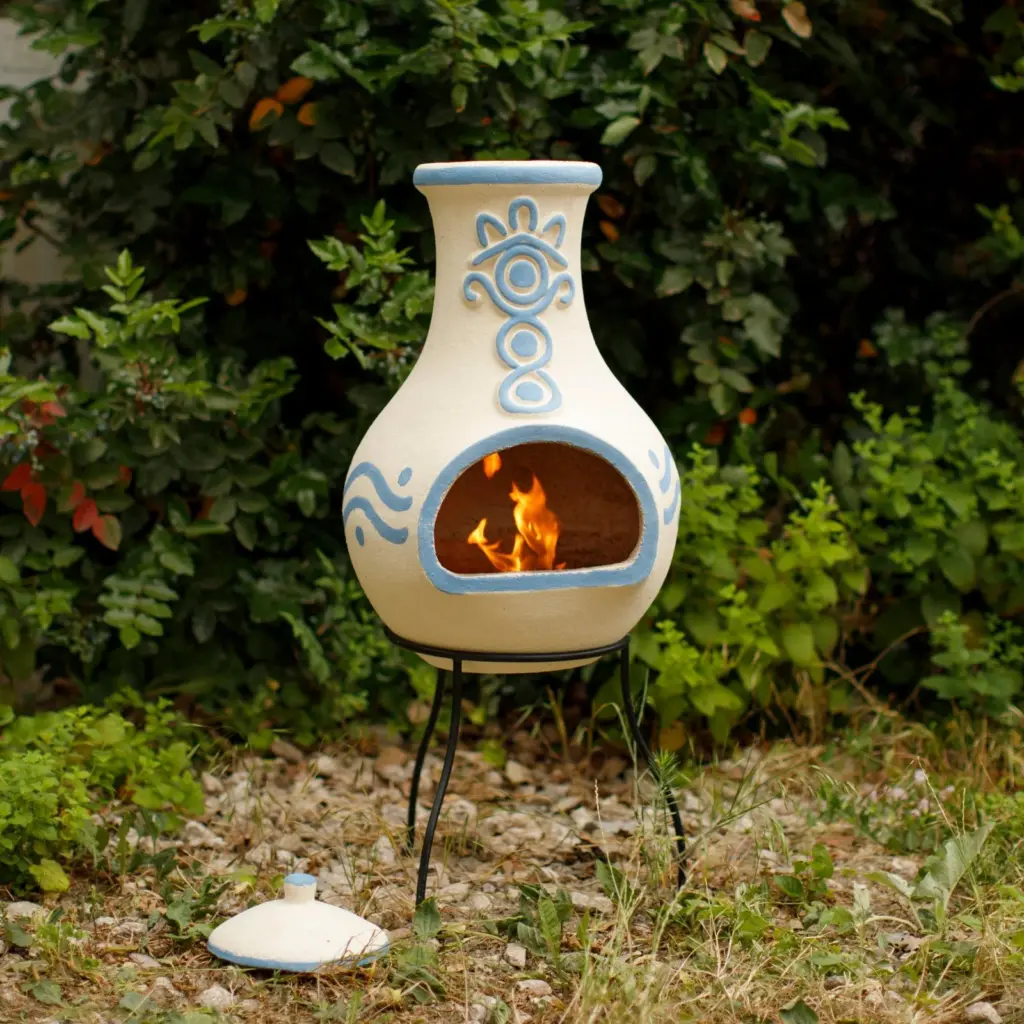
Cast iron has a dark, industrial look, often with cut-out patterns that let the flames show through. Clay keeps the classic Mexican-style shape, a wide belly with a tall chimney, in the warm color of fired ceramic. At Sparkle Stone every piece is shaped, fired and hand-painted in our own workshop in Moldova, with relief ornaments in light red or light blue. Color intensity varies slightly from piece to piece, so no two are exactly alike.
Which one is right for your patio?
- Choose clay if you want a piece that is decorative and functional at once, you have a garage or shed for winter, and you use the fire for warmth and atmosphere rather than grilling.
- Choose cast iron if it has to stay outside year-round without fuss, you often build large fires, and you want to cook on a grate.
Still deciding whether you want a chiminea at all? Our guide chiminea vs fire pit covers that choice. If clay is your pick, the full specs of our 34-inch handcrafted clay chiminea with protective lid are on its product page.
Can you cook on a clay chiminea like on cast iron?
Not to the same extent. With clay you cook simple things over the embers, on skewers or in foil; for a loaded grill grate, cast iron is the better fit.
Does clay crack from heat?
Not from heat itself, but from sudden changes: a big fire before curing, water on a hot chiminea, or frost with moisture in the clay. With gradual heating and moderate fires, clay is made for fire.
Which is safer around kids and pets?
Neither is safe to touch while it is burning. Cast iron gets hotter on the surface faster, but the rule is the same for both: keep a safe distance, supervise, and let the fire die out completely before you walk away.
Is a clay or metal chiminea better for heat?
Cast iron heats up faster and radiates harder; clay warms more slowly and gives steadier, more even heat. The best chiminea for heat depends on whether you want quick, strong warmth or a gentler, lasting one.
Are clay chimineas any good?
Yes, if the clay is cured, burned with moderate fires and kept dry in winter. One left wet outside through a hard freeze can crack in a single season.