
Chiminea Care: Winter, Covers and Cracks
A clay chiminea lasts for years if you follow three rules: heat it gradually, starting with the first fire, keep it dry, and protect it from frost. Nearly every serious crack comes from thermal shock or from water freezing inside the clay, not from normal use.
Fired clay expands with heat, contracts with cold and absorbs a little moisture. Give it time to move through those changes and your clay outdoor fireplace will serve you season after season.
What should you do before the first fire?
Before its first real evening, a clay chiminea needs curing: a layer of sand about 4 in (10 cm) deep in the base, then a few small fires, each slightly larger than the last, with a full cool-down in between. The step-by-step method is in our guide on how to cure a clay chiminea. The principle behind it still applies after curing: clay does not like sudden changes. Treat the first fire of every season, especially after a winter break, the same way and start small.
How do you care for a chiminea after each use?
After every evening, let the fire burn out on its own and let the chiminea cool naturally, ideally overnight. Pouring water on hot clay is the fastest way to crack it, because it chills one part of the wall much faster than the rest.
- Ash: scoop it out only when it is completely cold, gently, without scraping the inside.
- Sand: it stays in place; if it is heavily mixed with ash or has gotten wet, sift it or replace it with dry sand.
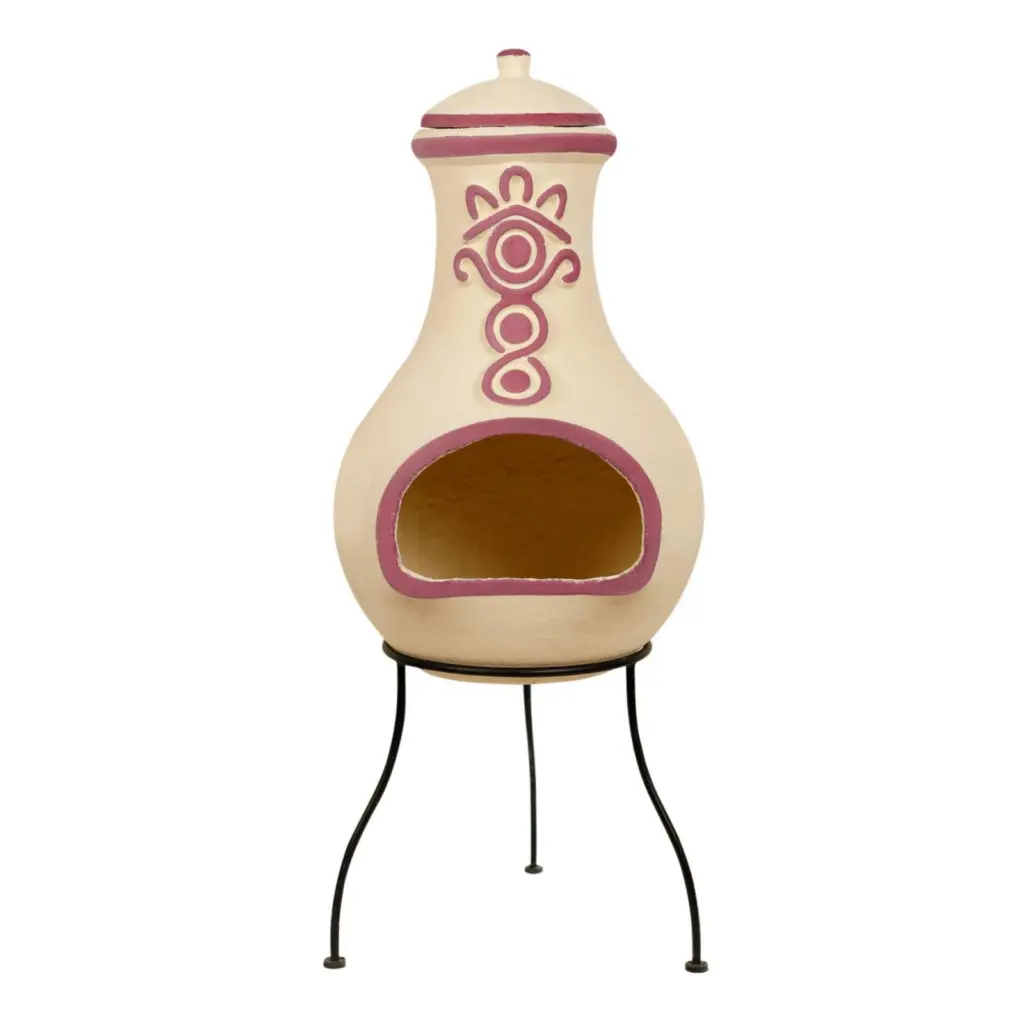
- Outside surface: wipe it with a dry or slightly damp cloth. Skip harsh cleaners and wire brushes, which can damage the hand-painted ornaments.
- Metal stand: check it now and then so the legs sit level and the body does not tilt.
Never move a chiminea while it is warm. When it is cold, lift it by the body, from the base, never by the chimney, which is the thinnest part of the piece.
What is the lid for, and do you need a cover?
The included protective lid keeps rain out of the chimney between uses, so put it on whenever the chiminea is cold and not in use. Rain that gets in soaks the sand and the base, and damp clay should never be heated quickly. If water did get inside, give it a few dry days and start again with a small fire.
A waterproof, breathable cover helps during rainy spells or if the chiminea sits fully exposed. The rule is simple: cover it only when it is completely cold and dry. A cover over a wet chiminea traps the moisture inside and does more harm than good.
How do you store a clay chiminea for winter?
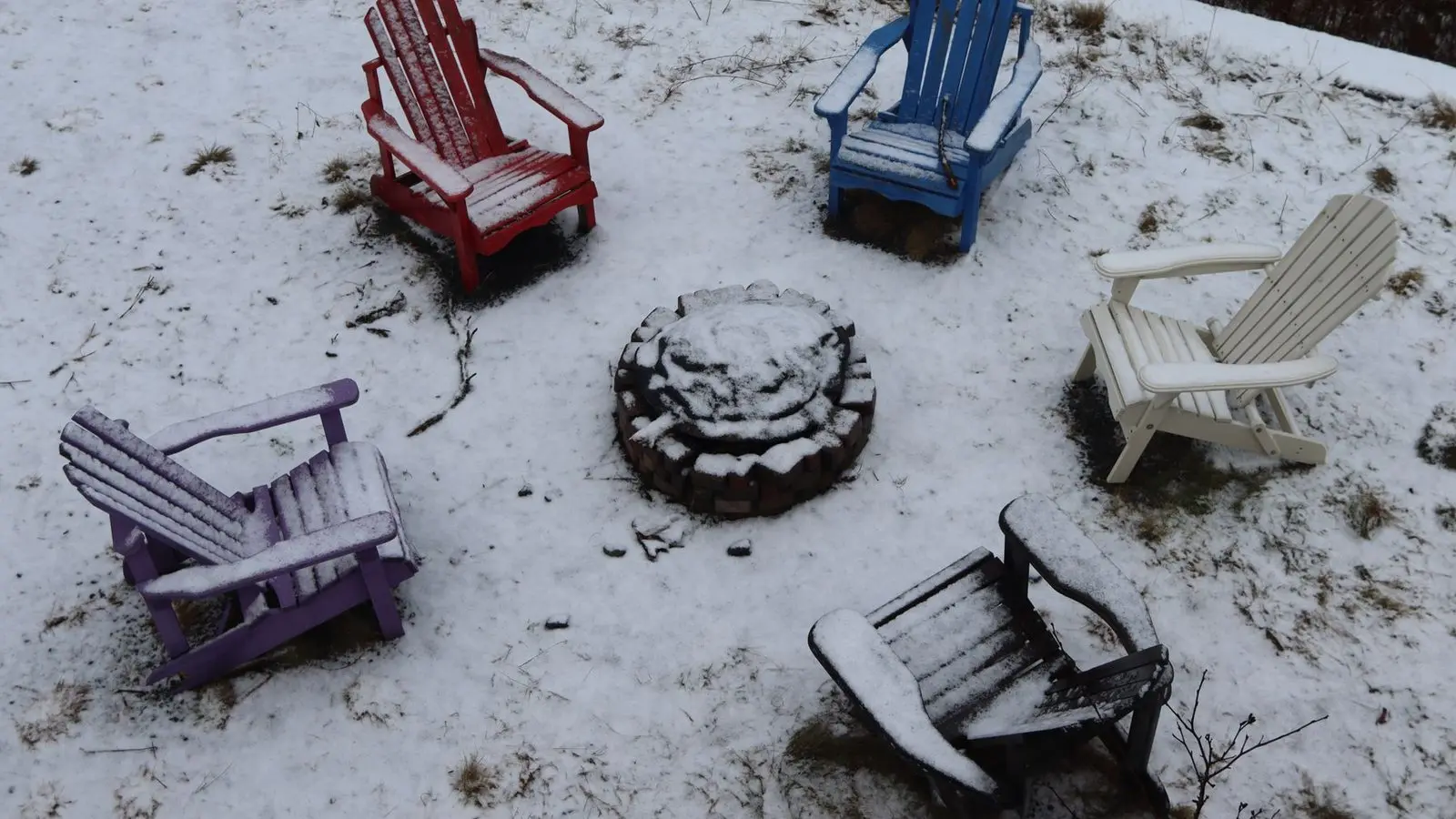
The safest winter spot for a clay chiminea is under a roof: a garage, shed or any dry space where water cannot freeze inside it. The cold itself is not the problem; moisture plus frost is. Water absorbed by the clay freezes, expands, and after repeated freeze-thaw cycles it can flake the surface or open cracks.
- Empty the ash, and the sand too if it is damp; add fresh dry sand before the first spring fire.
- Let the chiminea dry out completely before you store it.
- If you cannot move it indoors, raise it off the ground, put the lid on and cover it, in a spot sheltered from wind and drifting snow.
Using it on cool fall evenings is fine, but take extra care: a small fire first, and never light it while it is wet or frozen.
What should you do if you find a crack?
First, work out what kind of crack it is. Fine hairline cracks on the surface can appear over time on any natural clay chiminea used with an open fire. They are common on natural clay and usually cosmetic. A crack that runs through the wall, grows wider from one fire to the next, or lets firelight show through is different: stop using the chiminea and do not light it again until you know what you are dealing with.
Most serious cracks share the same causes: a big fire before curing, too much wood at once, rain or water on hot clay, frost while the clay is wet, and knocks while moving it. Prevention is the best repair: moderate fires, a dry chiminea and shelter in winter. Where it stands matters too, so see where to place a chiminea, and for other common questions, check our FAQ.
Can I leave my clay chiminea outside all winter?
It is not recommended. If you have no other option, keep it dry, off the ground, with the lid on and under a cover, and never light it while it is wet or frozen.
Do I need to cure it again every spring?
A full cure is not needed, but the first fire of the season should be small, in a thoroughly dry chiminea, with the fire size built up gradually over the next few evenings.
How do I put the fire out without water?
Stop adding wood toward the end of the evening and let it burn down to ash. In a real emergency, people always come before the ceramic.