Why Does Campfire Smoke Follow You? What Is Going On, and Where to Sit
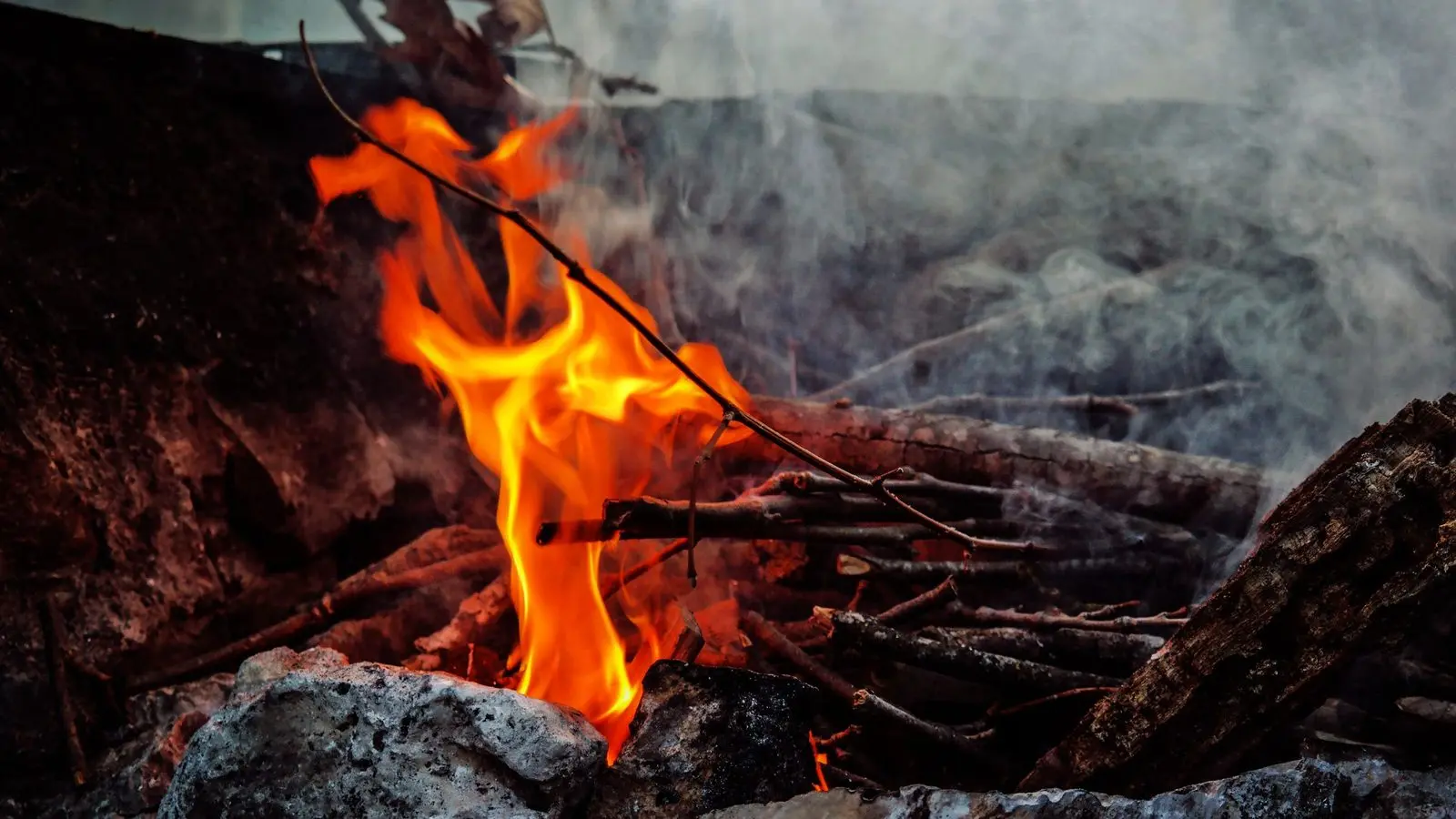
Smoke doesn’t pick people. It goes where the air goes: with the wind, toward the side of the fire where less fresh air is flowing in, and into the still pocket of air your body creates. Damp wood and a smoldering fire make cool, heavy smoke that drifts at face height instead of rising. Dry wood, a small bright fire, a chimney to lift the smoke and the right seat take care of most of it.
Everyone has had the evening where they move three times around the fire and the smoke moves with them. It feels personal. It isn’t, and once you know how a fire breathes, you can usually stay out of it.
1. The fire pulls air in from every side
A fire heats the air above it, and hot air rises. To replace it, cooler air flows in toward the base of the fire from all around. That inflow is what keeps a fire burning, and it also shapes the smoke plume.
When you sit next to the fire, your body, your chair and your legs block part of that inflow on your side. Less air comes in from where you sit than from the open sides, so the plume tends to lean toward the side with less air pushing against it, which is often your side. This is the usual explanation for why smoke “chooses” the people sitting closest, and why it seems to find whoever just moved.
2. Your body leaves a calm pocket behind it
Even a light breeze flowing past you leaves a small zone of slower air on your downwind side, a bit like the calm water behind a rock in a stream. Smoke drifting by can get caught in that pocket and swirl around you. When you get up and walk away, you drag a little of that calm air with you, and the smoke can seem to follow.
3. The wind keeps shifting
In a backyard, wind rarely blows from one direction for long. Houses, fences, hedges and trees break it into gusts and eddies that swing around every few minutes. The seat that was clear a moment ago is downwind now. That’s not the smoke following you; it’s the breeze changing, and you noticing only the times it lands on you.
4. Smoldering smoke doesn’t rise
Hot, clean-burning fire sends its smoke up fast. A smoldering fire, from damp wood, too much wood packed in or a fire that’s dying down, makes cooler, thicker smoke that rises slowly and spreads sideways at the height of people’s faces. Most “the smoke keeps following me” nights are really “the wood is wet” nights. How to tell seasoned wood from wet is in how to season and store firewood.
“Smoke follows beauty”
It’s an old campfire saying, and a kind one: when the smoke drifts toward someone, they’re told it’s because they’re the best looking person at the fire. It’s not physics, but it’s a better line than “move your chair”.
Where to sit
- Not downwind of the fire. Check which way the breeze is blowing before you sit down: a ribbon, a bit of grass or the smoke itself will show you. Smoke drifts with the wind, so the seats it blows toward get the most.
- Not in a gap. Spots between two walls, between a house and a fence, or in a narrow corner channel the wind and the smoke.
- Not too close. The closest seats block the most inflow. Sitting at a comfortable distance helps the fire draw evenly.
- With a chiminea, in front of the mouth. In a light breeze the chimney lifts the smoke over the heads of the people in front, so that’s usually the clearest seat, and behind the chimney the smokiest. In a stronger wind, shift toward the upwind side, and if the smoke still finds you, keep the fire small or call it a night.
- Leave space between chairs so air can still reach the fire from all around.
How to make less smoke
- burn only seasoned hardwood, split small, and keep softwood for kindling;
- light the fire from the top and let it get going before adding more; the method is in how to light a chiminea;
- add one or two pieces at a time instead of a full load;
- don’t burn leaves, green branches or trash;
- turn the chiminea’s back to the prevailing wind, only when it’s completely cold.
If the smoke is reaching the neighbors rather than you, the same rules apply, plus a few about timing and talking to them: see chiminea smoke and your neighbors. And if it already got into your sweater, here’s how to get the smoke smell out.
Our chiminea, in short
Sparkle Stone chimineas are handmade from 100% natural, kiln-fired clay rated for 500-600°C (932-1112°F). They stand 34 in (87 cm) tall on the included tripod stand and come with a protective lid. The fire burns inside the belly, air comes in through the front, and the chimney draws the smoke upward. See our clay chimineas or the blue ornamented version. They are currently sold out in the US, so the product pages are there for specs and reference prices.
Why does smoke follow me around the fire?
Because the fire pulls in air from every side, and where you sit, your body blocks part of that air, so the plume leans your way. Shifting wind and the calm pocket of air behind you do the rest.
Does smoke follow beauty?
Only in the old campfire saying. The real causes are the wind, the air flowing into the fire and smoldering wood, but the saying is a nice thing to tell whoever is getting smoked.
Where should you sit to avoid campfire smoke?
Out of the path the wind carries the smoke, at a comfortable distance, not in a gap between walls or fences, and with a chiminea, in front of the mouth rather than behind the chimney.
Does a chiminea make less smoke in your face than a fire pit?
A chiminea makes the same wood smoke, but its chimney draws it upward, while an open fire pit lets it drift in every direction. With dry wood, the seats in front of a chiminea stay mostly clear.