How to Season and Store Firewood for a Chiminea
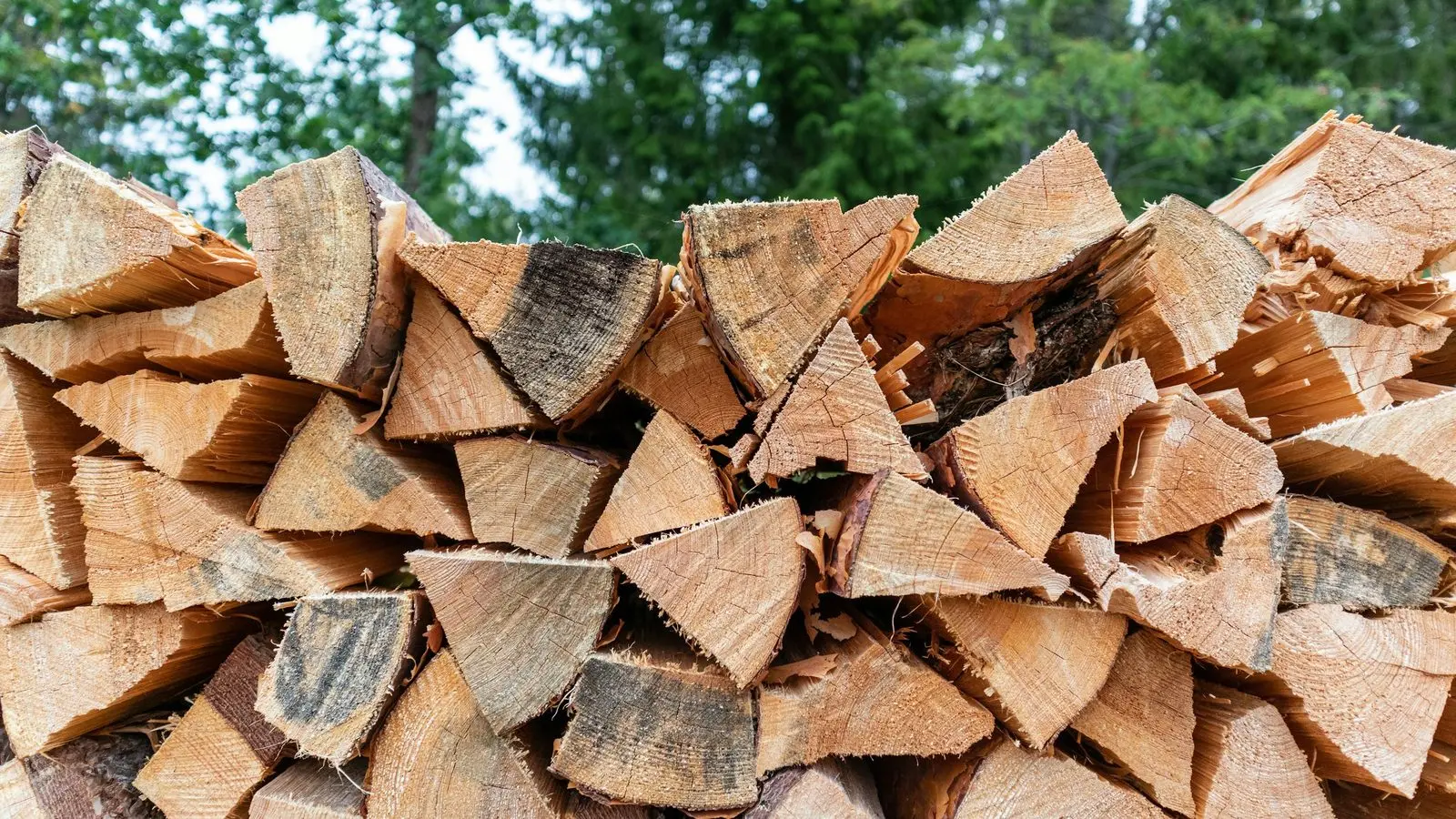
To season firewood, split it, stack it off the ground with gaps for air, cover only the top and leave the sides open to sun and wind. Most firewood needs at least one full warm season to dry, and dense hardwoods like oak take longer. For a clay chiminea this matters: only well-seasoned wood burns clean, with a calm flame and little smoke.
Our guide on what to burn covers which woods are good. This one covers what comes before that: how wood gets dry, and where to keep it outside until the evening you need it.
Why does seasoned wood matter so much?
Freshly cut wood is full of water. In the fire, part of the heat goes into boiling that water off: the wood hisses, catches slowly, smolders and smokes. In a chiminea that means smoke in your guests’ eyes, buildup in the chimney, and the temptation to pile on more wood to “get it going”, which is exactly the oversized fire clay doesn’t like. Dry wood lights easily, burns hotter and calmer, and leaves less ash.
How do you season firewood?
- Split it early. A whole round dries very slowly, because moisture leaves mostly through the ends and the split faces. For a chiminea, split it into pieces short enough to fit entirely inside the bowl, without sticking out of the front opening.
- Get it off the ground on a rack, rails or pallets. Wood stacked straight on the soil wicks up moisture and rots at the bottom.
- Let it breathe. Leave small gaps between pieces, split faces toward the air, and don’t stack it tight against a wall.
- Cover the top only. Eaves, a shed roof or a tarp across the top keep rain and snow off. The sides stay open.
- Sun and wind. A sunny, breezy spot dries wood far faster than a shady, sheltered corner.
How long does it take to season firewood?
It depends on the species, the size of the pieces and where it’s stacked, so there’s no single number. As a rule of thumb, split and well-stacked wood needs at least one full warm season. Dense hardwoods like oak and black locust usually need longer, and so do thick pieces. If you’re splitting wood for the chiminea now, think about next year’s evenings rather than next week’s.
An inexpensive moisture meter gives you the real answer: as a general guide, firewood is ready once it reads below about 20%. Measure on a freshly split face, not on the bark.
How can you tell if firewood is dry?
- it feels lighter than it looks;
- it has fine cracks at the ends;
- the bark comes away easily;
- two pieces knocked together sound sharp, not dull;
- on the fire, it doesn’t hiss or bubble at the ends.
How do you store firewood outside and keep it dry?
The most common setups, from simple to complete:
- An outdoor firewood rack with a roof or a cover across the top. It takes little space and keeps the stack straight.
- A woodshed or lean-to open on one side, with a raised floor or pallets. The right answer for larger amounts.
- Against the house under the eaves works for a small stack, but leave an air gap between the wood and the wall and keep it away from doors and windows. Woodpiles shelter insects, and you don’t want them next to the house.
- A basket or log box on the patio for one evening’s wood. Only for an evening or two, not for storage.
Whatever you choose, the main pile stays away from the fire. Near the chiminea, keep only that evening’s wood, a few steps away, never right against the clay. For the rest of the layout, see our chiminea patio ideas.
What wood should go in a clay chiminea?
Natural, well-seasoned hardwood, split to fit the bowl. Softwood only as kindling. Never painted, stained or pressure-treated wood, pallets of unknown origin or old furniture. The full list is in what to burn in a chiminea.
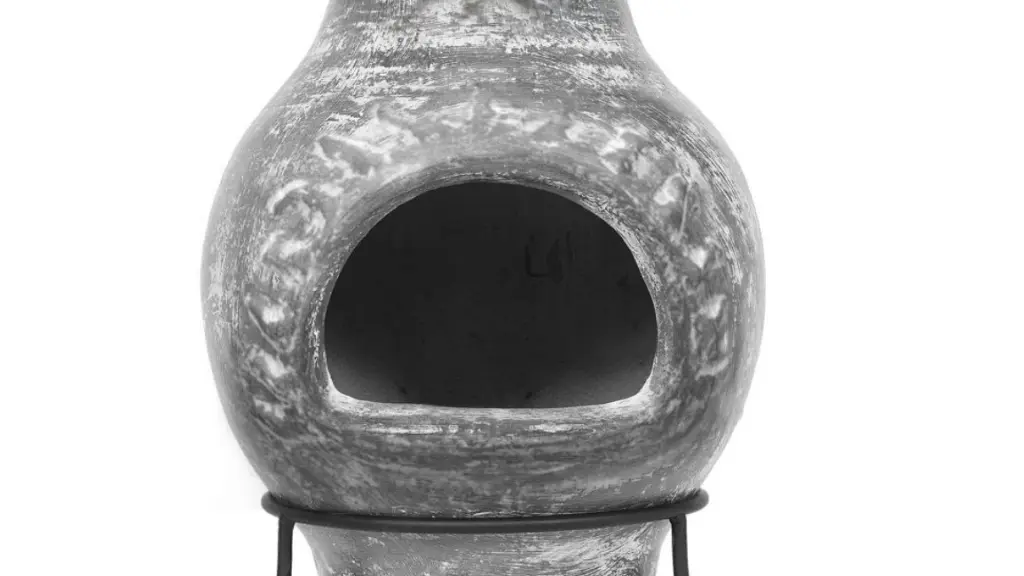
Sparkle Stone chimineas are handmade from 100% natural clay and stand 34 in (87 cm) tall on the included tripod stand, with a wide bowl that takes seasoned hardwood. See our clay chimineas or the blue ornamented version. They are currently sold out in the US, so the product pages are there for specs and reference prices.
How long does firewood take to season?
Usually at least one full warm season once it’s split, stacked off the ground and covered on top. Oak, black locust and thick pieces take longer.
Can you store firewood against the house?
A small stack under the eaves, with an air gap from the wall and away from doors and windows. Keep the main supply on a separate rack or in a shed.
Should you cover a woodpile with a tarp?
Only the top. A tarp pulled down to the ground on every side traps moisture, and the wood stops drying.
How can you tell if bought firewood is seasoned?
It’s light, cracked at the ends, the bark comes off easily and it sounds sharp when knocked together. A moisture meter gives you the exact answer.