
Gas Fire Pit vs Wood-Burning Chiminea: Which One Is Right for Your Backyard?
A gas or propane fire pit lights with a switch, makes no wood smoke, ash or sparks and shuts off just as fast, but it usually gives less heat and needs a propane tank or a gas line. A wood-burning clay chiminea gives a real fire, with the crackle, the smell, the embers and steady radiant heat from hot clay, in exchange for some smoke, ash to clear and a supply of seasoned firewood. Neither is “better” overall; they make different evenings.
Below, the two compared on the same points. If you’re weighing a propane patio heater instead, that’s a separate comparison: patio heater vs chiminea. For open wood-burning fire pits, see chiminea vs fire pit.
What each one is
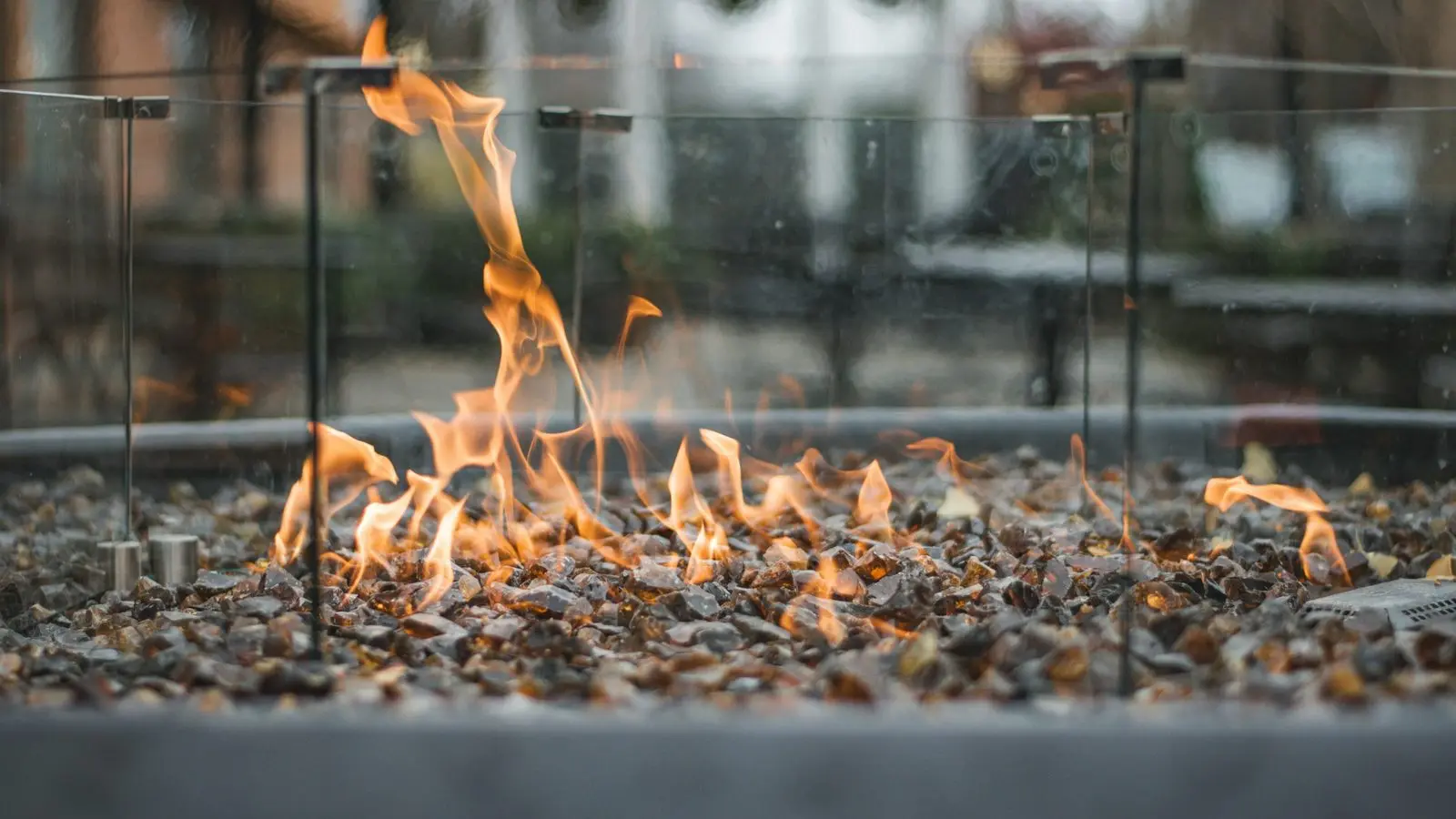
- Gas fire pit or fire table: a burner set in a bowl or a table, fed by a propane tank with a regulator (often hidden inside the table) or by a natural gas line. The flame dances over lava rock, fire glass or ceramic logs.
- Bioethanol fire pit: a small burner you fill with liquid alcohol fuel. No hookup, easy to move, a small clean flame.
- Wood-burning chiminea: a freestanding clay or metal fireplace with a belly, a front opening and a chimney, burning seasoned wood and, in small amounts, charcoal.
Heat
Many gas fire pits and fire tables are more about the look of the flame: they warm hands and faces nearby, but less than a wood fire of the same size. A wood fire puts out more heat, and a hot clay chiminea radiates it steadily through the mouth, even after the flames die down. How hot a clay chiminea gets, and how far the heat reaches, is in how hot does a chiminea get.
Smoke, smell and sparks
Gas wins here: no wood smoke, no sparks, no smoky clothes. Wood always makes some smoke, especially while it’s getting going or if the wood is damp. A chiminea’s chimney draws it upward, but it doesn’t make it disappear. If your neighbors are close or sensitive to smoke, weigh that seriously; how to keep wood smoke down is in chiminea smoke and your neighbors.
Ambiance
For many people, this decides it. A wood fire crackles, smells like fall, changes from minute to minute, makes embers for s’mores, and someone gets to tend it. A gas flame is quiet, even and always the same. Both are lovely; they’re different nights.
Fuel and everyday use
- Propane: tanks get swapped or refilled; a natural gas line should be run by a licensed pro. On, off, adjust with a knob.
- Bioethanol: sold in bottles or cans. Refill only when the burner is out and cold, never near a flame, and wipe up spills at once. In daylight the flame is hard to see.
- Wood: you need seasoned hardwood, stored off the ground and out of the rain. Lighting takes a few minutes, and at the end of the night the fire burns down on its own.
Safety
The outdoor versions in this article, all three, are open flames and belong outdoors, with open sky above: not on an enclosed porch and not in a garage (see can you use a chiminea indoors). With gas, check the hose and connections at the start of the season and follow the manufacturer’s instructions. With bioethanol, the refilling rule above matters most. With wood, sparks call for distance: 6-10 ft from walls, wooden fences and fabric, with pavers, stone or brick underneath.
Burn rules where you live
Some cities, counties and air districts limit wood burning on certain days or in dry seasons, and the rules sometimes treat gas differently from wood. They vary a lot from place to place, so check your local fire department or air quality agency before you buy, especially if you’re in a dry region.
Upkeep
Gas leaves no ash; the burner and the media get a cleaning now and then. Wood leaves ash, which you scoop out cold and can use in the garden. A clay chiminea also needs curing at the start, moderate fires and shelter from freezing weather.
So which one?
- Gas, if you want a fire at the push of a button, no smoke, close neighbors, and moderate warmth is enough.
- Bioethanol, if you want a small decorative flame with no hookup that’s easy to move.
- Wood, if you want a real fire, more heat, embers for marshmallows and potatoes, and you don’t mind tending it. If wood wins, see how to choose a chiminea.
Our chiminea, in short
Sparkle Stone chimineas burn wood: they’re handmade from 100% natural, kiln-fired clay rated for 500-600°C (932-1112°F), stand 34 in (87 cm) tall on the included tripod stand and come with a protective lid. The hot clay radiates heat steadily through the mouth, and the chimney draws the smoke upward. See our clay chimineas or the red ornamented version. They are currently sold out in the US, so the product pages are there for specs and reference prices.
Is a gas fire pit better than wood?
It’s easier: a switch, no smoke, no ash. Wood gives more heat, a real crackling fire and embers for cooking treats. Choose by the kind of evening you want and how close your neighbors are.
Which gives off more heat, propane or wood?
Usually wood. Many propane fire pits are more about the look of the flame, while a wood fire in a clay chiminea heats the clay, which keeps radiating after the flames die down.
Can you convert a clay chiminea to gas?
It’s not a good idea. Our clay chimineas are designed for wood and small amounts of charcoal. Putting a gas or bioethanol burner in the bowl isn’t a tested setup for clay.
Can you use a gas fire pit when wood burning is restricted?
Sometimes. Some local rules treat gas differently from wood, but not all do. Check with your local fire department or air quality agency.