Can You Use a Chiminea in Winter? Cold-Weather Fires Without Cracks
Yes, you can use a clay chiminea in winter, with one condition: it has to be dry and not frozen. Cold on its own doesn’t hurt fired clay; water freezing inside it does. In winter, bring the chiminea out of shelter just for the evening, start with a small fire, build it up slowly, let it cool on its own and put it back somewhere dry.
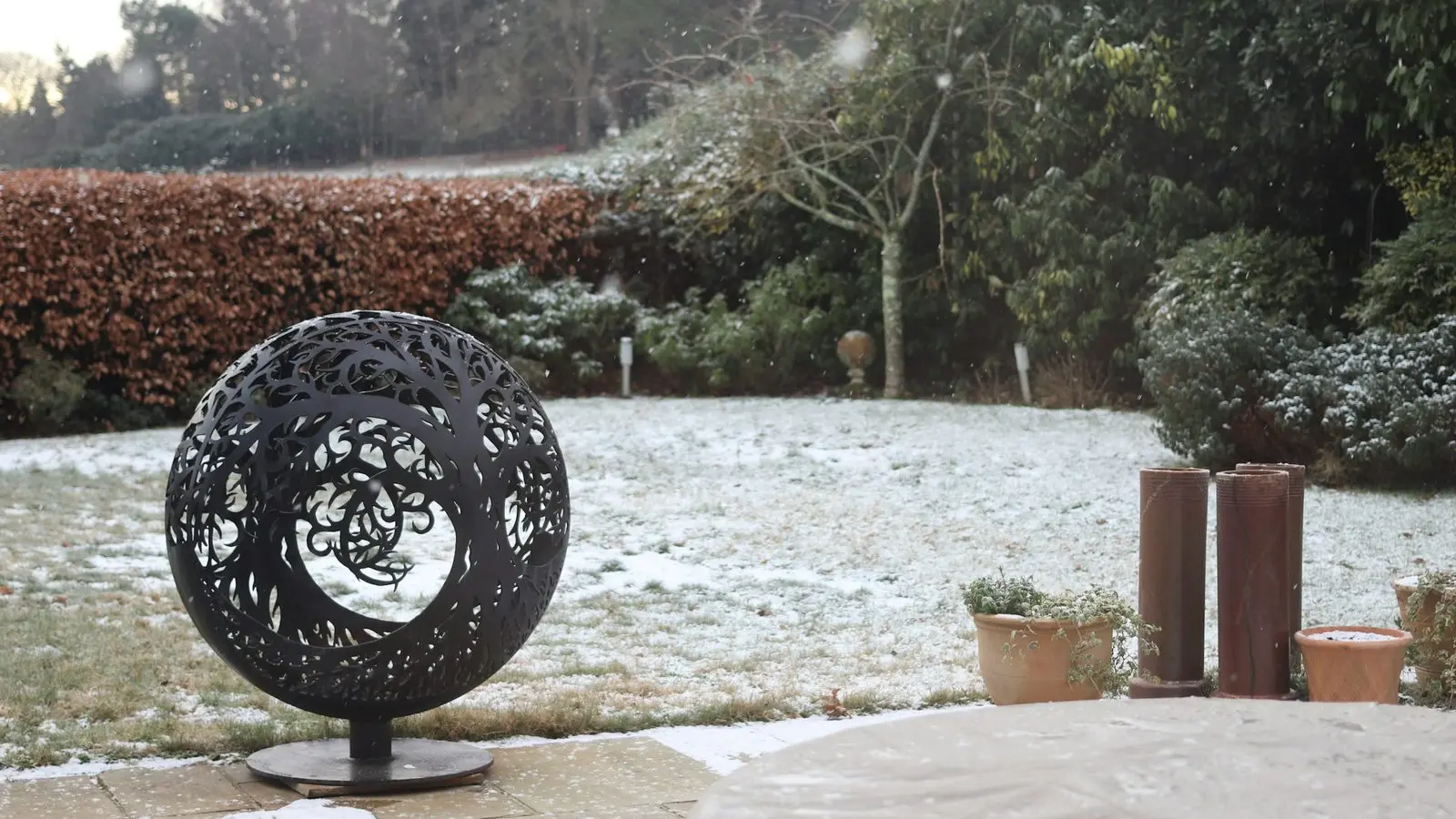
An evening around a fire with snow on the ground is one of the best ways to use an outdoor fireplace. Clay simply asks for more patience in winter than in summer. Here are the rules, in the order they matter.
Why is winter harder on a clay chiminea?
Fired clay expands with heat, contracts with cold and absorbs a little moisture. In summer, the gap between the cold chiminea and a lit fire is small, and the clay is dry. In winter the gap is large, and if water has soaked into the walls, it can freeze. Freezing water expands, and after repeated freeze-thaw cycles it can flake the surface or open cracks. A big fire lit suddenly in a cold, damp chiminea adds thermal shock on top. Hence the winter rule: dry, gradual, patient.
How do you get a chiminea ready for a winter evening?
- Keep it under cover between fires. The safest winter spot is a garage, shed or any dry space. Bring it out only for the evening. It weighs 38-44 lbs, so two people move it easily, especially with the stand carried separately.
- Move it only when cold, lifting by the body from the base, never by the chimney: the neck is the thinnest part of the piece.
- Check that it’s dry: no water in the bowl and no wet sand. If the sand got wet, replace it with dry sand.
- The spot: slabs, stone or brick cleared of snow and ice, so the stand sits level and can’t slide. Not on snow: it melts under the heat and the stand can tilt.
- Open sky above the chimney and 6-10 ft (2-3 m) from walls, wooden fences and fabric furniture, the same as in any season.
How do you build a fire in the cold?
The first fire of the evening is small: paper, kindling and a few thin splits, so the clay warms up gradually. Once it has warmed evenly, build the fire slowly, a piece or two at a time. Flames stay inside the bowl; if they come out of the opening or the chimney, the fire is too big, and in winter even more so. The top-down method, step by step, is in how to light a chiminea.
The wood has to be properly seasoned, which takes more care in winter: bring the evening’s wood from a covered spot, not out of the snow. Wet wood smolders and smokes. See how to season and store firewood.
How do you stay warm around a chiminea in winter?
A chiminea throws most of its warmth out of the front opening, and the hot clay radiates steady heat. Set the chairs in front of the opening, with the back of the chiminea to the wind. In winter, wind carries heat away fast, so a sheltered spot with open sky overhead does more than a bigger fire. Warm layers, a blanket, hot drinks: the fire does the rest.
What do you do after a winter fire?
- Toward the end, stop adding wood and let the fire burn down to ash.
- Don’t pour water or pile snow on hot clay, however handy it is.
- Let the chiminea cool completely, ideally overnight.
- Scoop out the cold ash, put the lid on the chimney and move it back under cover.
If you have nowhere to move it, raise it off the ground, put the lid on and cover it with a waterproof, breathable cover, in a spot sheltered from wind and drifting snow. The cover goes on only when the chiminea is completely cold and dry. The rest of the winter routine is in our chiminea care guide.
Our chiminea, in short
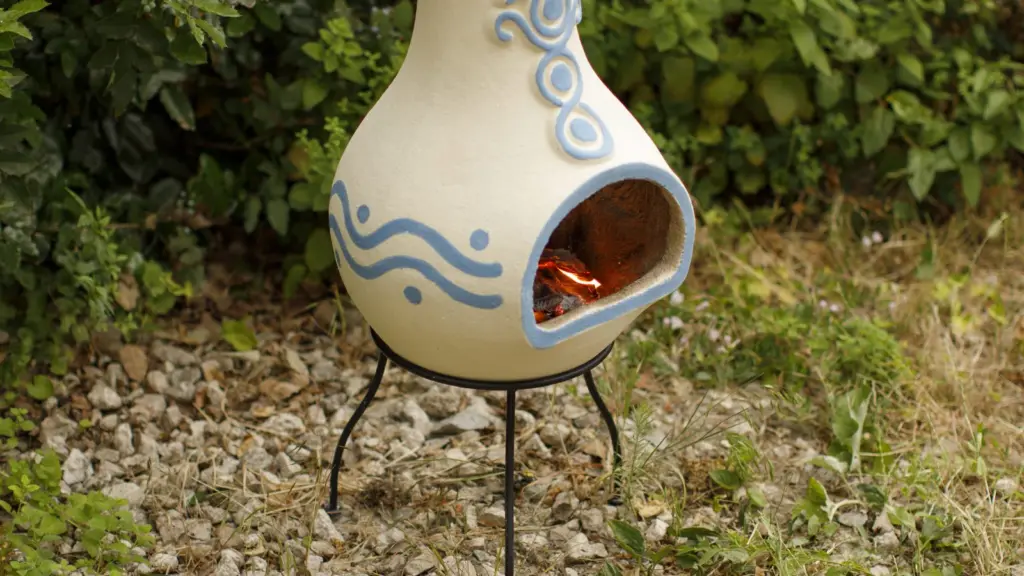
Sparkle Stone chimineas are handmade from 100% natural, kiln-fired clay rated for 500-600°C (932-1112°F), stand 34 in (87 cm) tall on the included tripod stand and come with a protective lid that keeps rain and snow out of the chimney between uses. See our clay chimineas or the red ornamented version. They are currently sold out in the US, so the product pages are there for specs and reference prices.
Can you light a chiminea in the snow?
Yes, if the chiminea is dry and not frozen and the base is cleared of snow and ice. Start with a small fire and build it up gradually.
What if my chiminea froze outside?
Don’t light it. Move it somewhere sheltered and dry, let it thaw and dry out for a few days, then start with a small fire.
Do you need to cure a chiminea again in winter?
A full cure isn’t needed, but the first fire of every cold evening, and the first fire after a long break, should be small, with the flame built up slowly.
Can a chiminea stay outside between winter fires?
It’s not recommended. If there’s no other option, raise it off the ground, put the lid on and add a cover, only over a cold, dry chiminea, and never light it while it’s wet or frozen.