How to Put Out a Chiminea Fire and What to Do With the Ashes
Don’t put out a clay chiminea with water. Stop adding wood an hour or two before you head inside, let the fire burn down to ash, smother any leftover embers with the sand in the bottom, and let the clay cool on its own overnight. Scoop the ashes out the next day, only when they’re completely cold, into a metal can with a lid. Ash from clean wood can go in the garden, in moderation.
Putting a chiminea to bed is the part of the evening nobody thinks about, but it’s where both safety and the life of the clay are decided. Here’s how to end the fire, when and how to clean out a chiminea, what to do with the sand, and how to use or get rid of the ashes.
How do you put out a chiminea fire?
The safest way is to let it finish on its own. An hour or two before you go in, stop adding wood. What’s left burns down to ash and small embers, and the chiminea cools naturally.
- No water. Water on hot clay chills one part of the wall much faster than the rest, and that is the fastest way to crack a clay chiminea.
- Smother the embers. Use a metal scoop to mix the sand from the bottom over the leftover embers. Cut off from air, they die down faster.
- Stay with it while there are still flames, especially on a windy night.
- The lid goes back on the chimney only once the chiminea is completely cold.
One rule comes before all of these: in a real emergency, if fire escapes the chiminea or something nearby catches, people come first and the ceramic second. Use water or an extinguisher without a second thought for the clay.
When should you clean out the ashes?
The next day, once the clay is cool to the touch and there is no warm spot left in the ash. Embers buried under ash can stay hot for many hours, even when the surface looks dead.
- Wear gloves. Wood ash is fine, dusty and mildly caustic on skin.
- Scoop the ash out gently through the front opening, without scraping the inside of the clay.
- Put it in a metal can with a lid, never in a plastic bucket, a cardboard box or straight into the trash.
- Leave the can outside on a non-combustible surface, away from walls, decks and the woodpile, for another day or two.
What about the sand in the bottom?
The sand layer, about 4 in (10 cm), stays in the chiminea: the fire is built on it, so embers never sit directly on the clay. If it’s heavily mixed with ash or has gotten wet, sift it or replace it with dry sand. Going into winter, empty damp sand along with the ash and add fresh dry sand before the first spring fire. The rest of the routine is in our chiminea care guide.
Is wood ash good for the garden?
Yes, in moderation. Wood ash contains potassium and calcium, and it makes soil less acidic. That explains both its uses and its limits:
- In the compost pile: sprinkled in thin layers between green material, not dumped in one heap.
- On acidic soil: it helps. On soil that is already alkaline, it isn’t needed. If you don’t know your soil’s pH, an inexpensive test kit from a garden center settles it quickly.
- A little, not often: a thin, even dusting worked lightly into the soil, not a thick layer in the same spot year after year.
- Keep it dry in a covered container until you use it; rain washes out part of the potassium.
Where should wood ash not go?
- Around acid-loving plants: blueberries, azaleas, rhododendrons, hydrangeas you want to keep blue.
- On potato beds, where less acidic soil encourages common scab on the tubers.
- Directly onto seedlings or freshly seeded beds.
- Never ash from painted, stained or pressure-treated wood, particleboard, plywood, additive-laced briquettes or trash. Those residues don’t belong in a garden, which is one more reason what you burn matters: see what to burn in a chiminea.
How do you get rid of chiminea ashes you don’t use?
Only when they’re completely cold, after a day or two in the metal can. Then bag them, close the bag and put them out with household trash, or check what your local waste service asks for. Ash from additive-laced briquettes always goes this way, never into the garden.
Our chiminea, in short
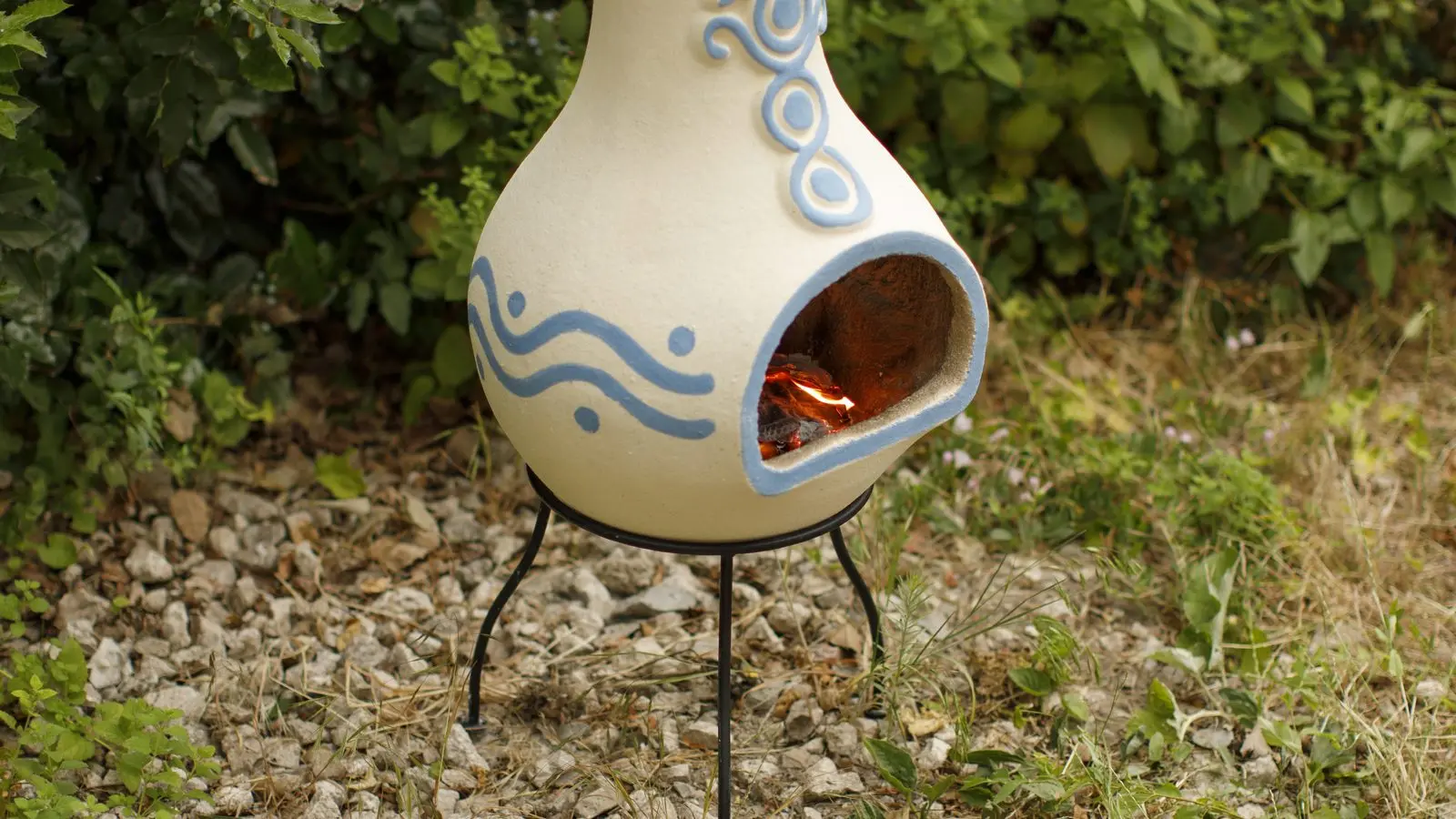
Sparkle Stone chimineas are handmade from 100% natural clay rated for 500-600°C (932-1112°F), stand 34 in (87 cm) tall on the included tripod stand and come with a protective lid. The fire sits on the sand in the wide bowl, and the ash comes out easily through the front opening. See our clay chimineas or the red ornamented version. They are currently sold out in the US, so the product pages are there for specs and reference prices. For the start of the evening, read how to light a chiminea.
Can you pour water on a chiminea to put it out?
Not as a routine: water on hot clay can crack the wall. Let the fire burn down to ash instead. Only in an emergency do you use water, because people come before the ceramic.
Can you leave a chiminea to burn out?
Yes, that’s the preferred way to end the evening, as long as someone stays with it until the flames are gone and the embers are covered with sand.
How long do chiminea ashes stay hot?
Buried embers can stay hot for many hours. Clean out the ashes the next day, only when the clay is cold, and keep them in a lidded metal can outside for another day or two.
Are fire pit and chiminea ashes good for the garden?
Ash from clean, untreated wood is, in small amounts, on soil that isn’t already alkaline. Keep it away from acid-loving plants and potatoes, and never use ash from treated wood or briquettes with additives.