What Is a Cord of Firewood? Buying Firewood for a Chiminea
A full cord of firewood is a tightly stacked pile 4 ft high, 4 ft deep and 8 ft long: 128 cubic feet, counting the air between the pieces. A face cord is a single 4 x 8 ft row whose depth is the length of the pieces, so it holds only a fraction of a full cord. For a clay chiminea, volume matters less than three things: the wood is seasoned, it is hardwood, and it is cut short enough to sit fully inside the bowl.
Fall is when most people buy firewood for the winter, and the same questions come up every year: how much is a cord, how do you know you got one, and how much do you actually need? Here are the answers, with a backyard chiminea in mind rather than a woodstove that runs all day.
Cord, face cord, rick and bundle
- Full cord. The standard unit: a stack 4 x 4 x 8 ft, or 128 cubic feet, air gaps included. It contains less solid wood than 128 cubic feet of log, precisely because of those gaps.
- Face cord. One row 4 ft high and 8 ft long, as deep as the pieces are long. With pieces around 16 in long, that’s roughly a third of a full cord. Shorter pieces mean even less wood.
- Rick. A regional name, often used for a face cord. Because it means different things in different places, ask the seller for the dimensions of the stack.
- Bundle. The small shrink-wrapped packs sold at grocery stores and gas stations. Convenient, but the most expensive way to buy wood by volume.
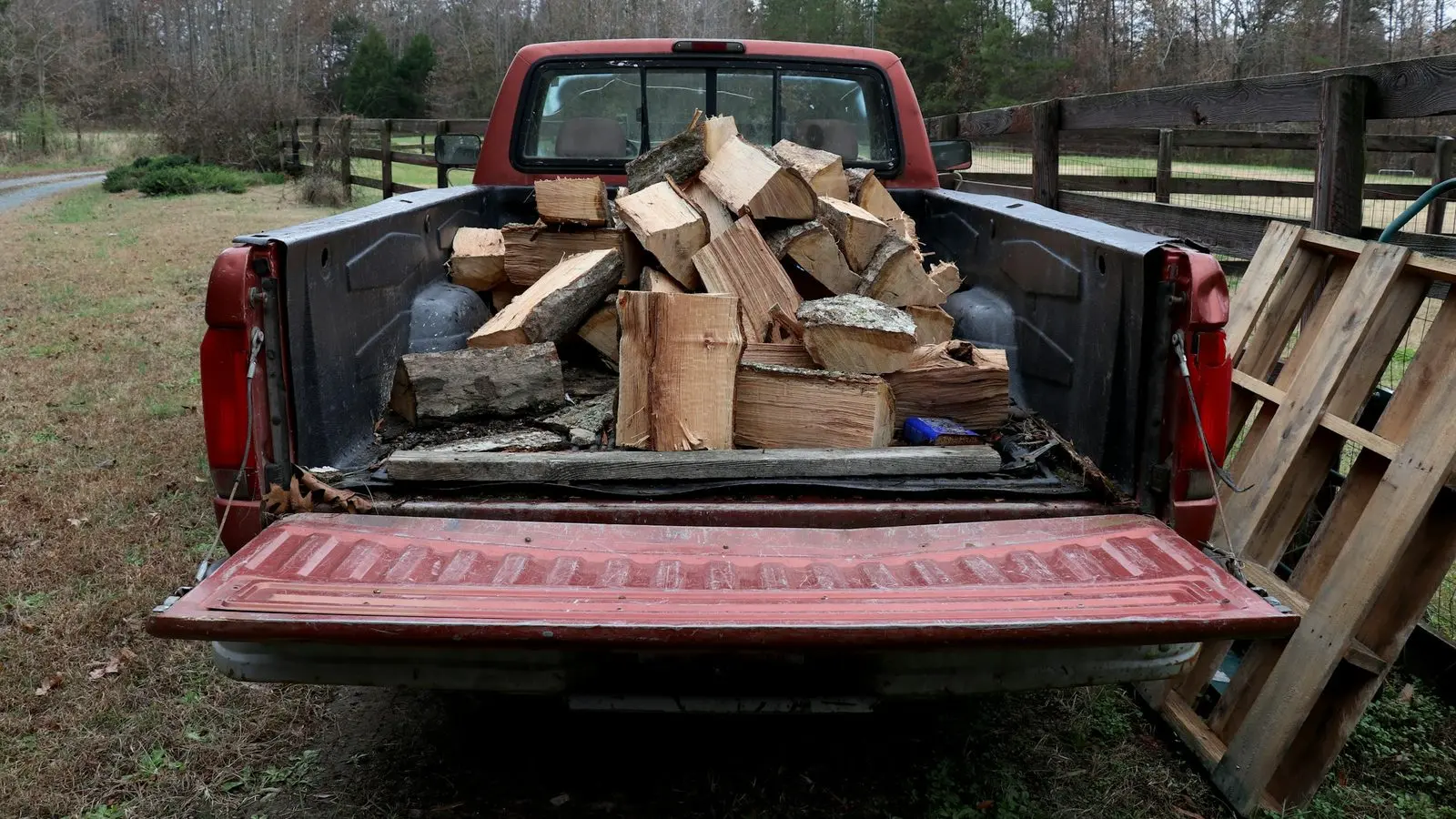
- Loose or thrown. Wood tossed into a truck bed takes up more space than the same wood stacked, so “a truckload” tells you little about how much you’re getting.
How to check a load when it arrives
- Stack it. Volume can only be judged on a stack. Lay the pieces tight and parallel, not crisscrossed.
- Measure it. Length times height times the length of the pieces gives cubic feet. Divide by 128 to get cords.
- Check the ends. Seasoned wood has cracks across the ends, feels lighter than it looks and two pieces knocked together sound sharp. Green wood is heavy, cool to the touch and sounds dull.
- Look for filler. Rotten or punky pieces, wood caked in dirt or mold, thin brush mixed in, or painted boards and scraps hidden in the pile.
If the wood turns out to be freshly cut, don’t put it in the chiminea this season. How to season it and tell when it’s ready is covered in how to season and store firewood for a chiminea.
What wood to ask for
For a clay chiminea, ask for seasoned hardwood: oak, hickory, maple or ash, plus fruit and nut woods like apple, cherry or pecan, which smell great. They burn steadily, make good embers and throw few sparks. Mesquite is dense and fragrant but burns hot, so it goes in a piece at a time.
Softwoods such as pine, fir and spruce aren’t off-limits, but they pop, spark and leave resin deposits. Keep a few thin pieces for kindling only. The full list, including what never goes in, is in what to burn in a chiminea.
Piece length: measure the chiminea first
Woodstove wood is cut to fit the firebox, and the same logic applies to a clay chiminea: each piece should sit fully inside the belly without poking out of the mouth. A piece that’s too long forces you to build a big fire or leave an end hanging out, and neither is safe or good for the clay.
- measure the mouth opening and the depth of the bowl before you order;
- ask for shorter, thinner splits, which burn cleaner in a small fire;
- if your wood comes long for a fireplace or stove, keep a separate crate of short pieces for the patio.
How much firewood do you need?
A chiminea isn’t a woodstove. The fire stays small, inside the bowl, and you feed it one or two pieces at a time, so an evening uses far less wood than an open bonfire. That’s why the math for a chiminea is done in evenings, not cords:
- count how many pieces you burn on a typical evening, from lighting to embers;
- multiply by the number of evenings you realistically expect this season;
- add some extra for long nights and for kindling.
If you also heat the house with wood, buy together and set the short, thin pieces aside for the patio. If the chiminea is your only wood fire and you light it a few times a month, a full cord may be more than you need; a face cord or a share of a cord with a neighbor often makes more sense.
Buy local
Firewood can carry insects and diseases that kill trees, and many states restrict moving firewood over long distances to slow their spread. Buy wood close to where you’ll burn it, and check your state’s rules before bringing wood home from a trip.
Our chiminea, in short
Sparkle Stone chimineas are handmade from 100% natural, kiln-fired clay rated for 500-600°C (932-1112°F). They stand 34 in (87 cm) tall on the included tripod stand and come with a protective lid; the wide bowl takes short splits fed one or two at a time. See our clay chimineas or the red ornamented version. They are currently sold out in the US, so the product pages are there for specs and reference prices.
How big is a cord of firewood?
A full cord is a tight stack 4 ft high, 4 ft deep and 8 ft long, 128 cubic feet including the air between the pieces.
What is the difference between a face cord and a full cord?
A face cord is a single 4 x 8 ft row, as deep as the pieces are long. With 16-inch pieces it’s about a third of a full cord; with shorter pieces it’s less.
How much firewood do you need for a chiminea?
Less than for a stove or an open fire pit, because the fire stays small. Count the pieces you burn on a typical evening and multiply by the evenings you plan for the season.
Should you buy firewood bundles or a cord?
For a few fires a month, bundles or a face cord are simpler and need no storage. If you burn often or also heat with wood, buying by the cord usually works out cheaper per fire.