What Is a Chiminea? How It Works, What It’s Made Of and What It’s For
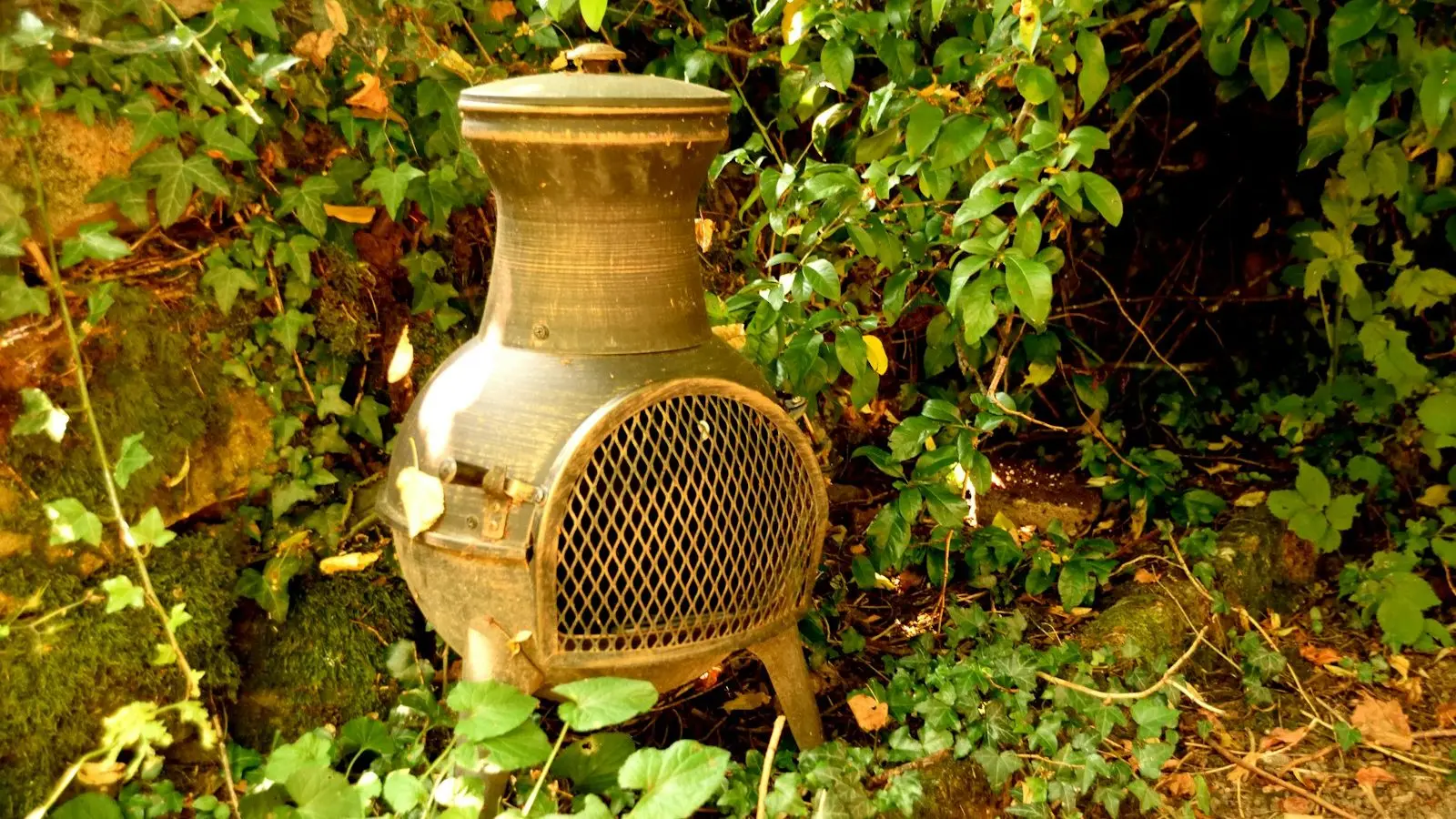
A chiminea is a freestanding outdoor fireplace: a wide, belly-shaped firebox with an opening at the front and a narrow chimney rising from the top. You build a small wood fire inside, air comes in through the front, and the chimney draws the smoke upward, above head height, while the warmth comes out toward the people sitting in front of it.
Chimineas are used on patios, decks with a proper hearth, and in backyards and gardens, for warmth on cool evenings, for the look of a real fire and for simple cooking over the embers. Below: how a chiminea works, what it is made of, what it is used for, how it differs from a fire pit or a chimney, and what to know before the first fire.
Where does the word come from, and how do you say it?
Chimenea is Spanish for chimney or fireplace. In American English the outdoor clay stove is usually spelled chiminea and pronounced roughly chim-uh-NAY-uh; the Spanish word sounds closer to chee-meh-NEH-ah. You will see both spellings on the same product. The design comes from Mexico, where clay chimineas have warmed courtyards for centuries; we tell that story in the history of the chiminea.
How does a chiminea work?
A chiminea works on the same principle as an old potbelly stove:
- The mouth. The front opening is where you load the wood and where fresh air enters to feed the fire. It is also where most of the warmth comes out.
- The belly. The wide, rounded firebox holds the fire and the embers behind its walls. In a clay chiminea, those walls soak up the fire’s heat and radiate it outward, and they keep radiating for a while after the flames die down.
- The chimney. Hot air rises up the narrow neck and pulls smoke with it. That draft is what keeps the fire drawing and sends the smoke above the heads of the people around it.
Most chimineas sit on a metal stand, which lifts the belly off the ground and keeps it stable. Clay ones need a layer of sand in the bottom, about 4 in (10 cm), and the fire is built on that sand rather than directly on the clay base. A lid for the chimney keeps rain out when the chiminea is not in use.
What is a chiminea made of?
The traditional material is fired clay, often called terracotta. Clay holds heat and releases it gradually, and it never rusts, but it needs a gentle first firing and protection from freezing weather. Today you will also find chimineas in cast iron and steel, which heat up faster, tolerate bigger fires and can stay outside year-round, but do rust. We compare the two in clay vs cast iron chiminea.
Our own chimineas are Mexican in style and handmade from 100% natural clay in our workshop in Moldova, with hand-applied relief ornaments, so no two are exactly alike.
What is a chiminea used for?
- Warmth on cool evenings on a patio or in a backyard, for the people sitting in front of the opening.
- Atmosphere: a real wood fire, contained and easy to manage, in a small space.
- Simple cooking over the embers: skewers, foil-wrapped vegetables or potatoes, bread on a stick. It is not a grill; see what to burn in a chiminea for wood, charcoal and cooking tips.
- Decoration: unlit, a handmade clay chiminea is simply a large piece of garden pottery.
Chiminea vs fire pit, chimney and outdoor fireplace
- Chiminea vs fire pit: a fire pit is open on top, so heat, sparks and smoke go in every direction. A chiminea encloses the fire and directs the smoke upward. Full comparison: chiminea vs fire pit.
- Chiminea vs chimney: a chimney is the flue of a house; a chiminea is a portable outdoor fireplace that carries its own small chimney.
- Chiminea vs built-in outdoor fireplace: a masonry fireplace is built in place and stays there; a chiminea is freestanding and can be moved when it is cold.
Is a chiminea safe to use?
A contained fire is easier to manage than an open one, but it is still a fire. A chiminea needs a non-combustible base such as concrete pavers, stone or brick, open sky above the chimney, with no roof, pergola or branches, and some distance from walls, fences and furniture. Our guide on where to place a chiminea covers decks, patios and yards. The outside of the clay gets hot while the fire burns, so keep kids and pets back, and do not pour water on hot clay to put the fire out.
What to know before your first fire
A new clay chiminea has to be cured: sand in the bottom, then three or four small fires, each a little bigger than the last, with the chiminea cooling completely in between. The steps are in how to cure a clay chiminea. After that, moderate fires, the lid on between uses and shelter from freezing weather will keep it going for years; see chiminea care.
Is a chiminea right for you?
If you have an open patio or a smaller backyard and want a real wood fire without sparks and smoke going everywhere, a chiminea is a very good fit. If your patio is covered, it is not; our comparison of patio heaters and chimineas helps there. If you want the reasons people choose one over a metal fire bowl, read why a chiminea.
Our clay chimineas stand 34 in (87 cm) tall on the included tripod stand, weigh 38–44 lbs and come with a protective lid, in a red or blue ornamented version. They are currently sold out in the US; the product pages show the full specs and reference prices.
Is a chiminea the same as a fire pit?
No. A fire pit is open on top; a chiminea encloses the fire in a belly-shaped body and sends the smoke up a chimney, with heat coming out of the front.
What is a chiminea made of?
Traditionally fired clay (terracotta). Metal versions in cast iron or steel also exist. Ours are made of 100% natural clay.
How do you pronounce chiminea?
In American English, usually chim-uh-NAY-uh. The Spanish word, chimenea, is closer to chee-meh-NEH-ah.
Do you need to put sand in a chiminea?
For a clay chiminea, yes: about 4 in (10 cm) of sand in the bottom. The fire is built on the sand, not directly on the clay base.
Do chimineas give off heat?
Yes. Heat comes out of the front opening, and the clay walls absorb the fire’s heat and radiate it steadily, even after the flames die down.