Patio Heater vs Chiminea: What’s the Best Way to Heat a Patio?
If you want instant warmth at the flip of a switch, with no smoke and nothing to clean up, get a patio heater. If you want a real wood fire, steady radiant heat and something people gather around, get a chiminea. Just remember that a chiminea needs open sky above it: it is not for a covered patio.
Both are ways to stretch patio season into cool evenings, and both work. They simply heat in different ways, cost different things to run and suit different spaces. Here is the honest comparison, point by point, so you can pick the right one for your patio rather than the one we happen to make.
How does each one heat?
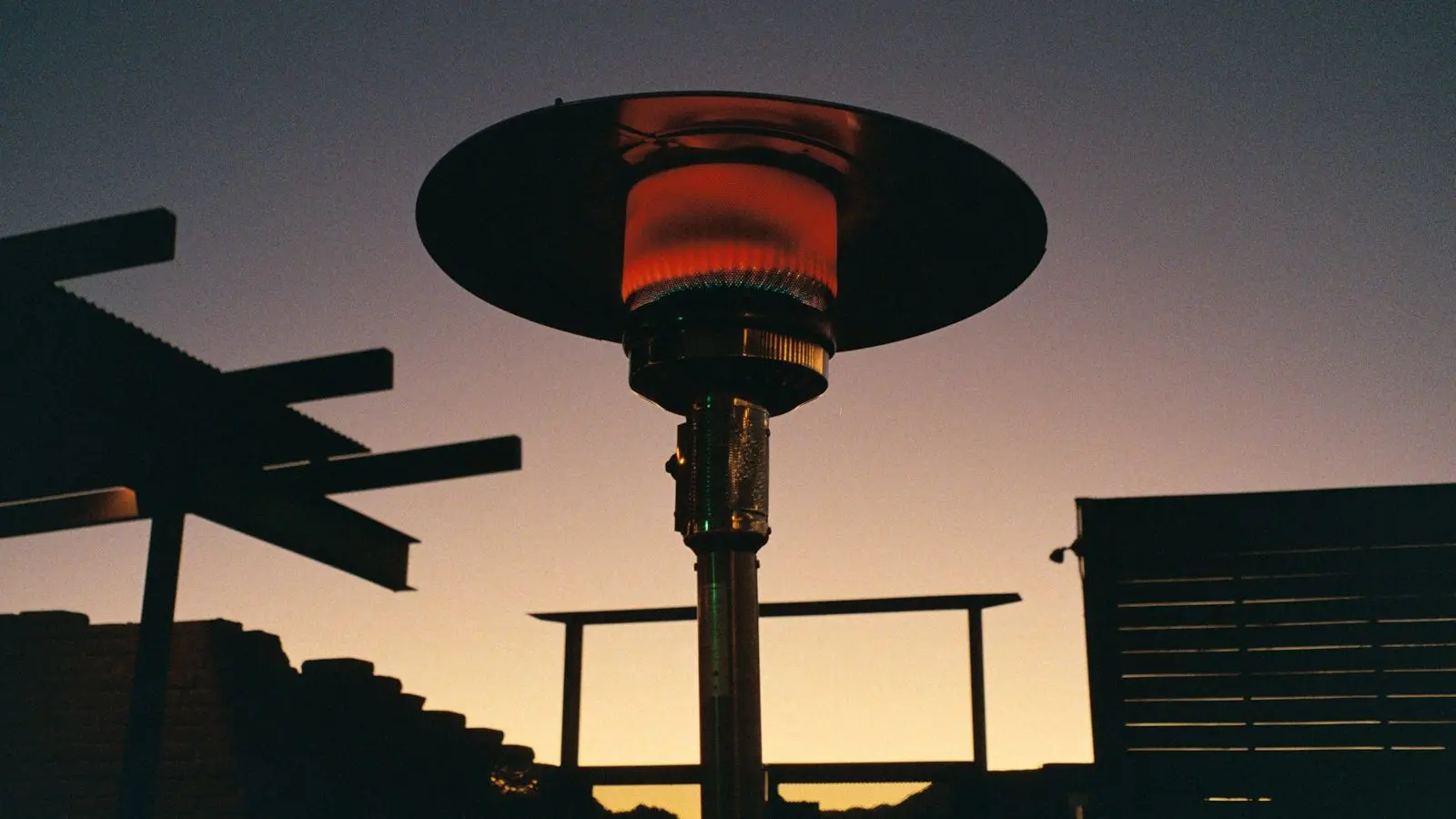
- Propane patio heater. Burns gas from a tank and throws radiant heat down and outward, usually from a reflector on top of a tall post. It is warm within minutes and off the moment you close the valve.
- Electric (infrared) patio heater. Plugs into an outlet or is wired in, and warms the people and surfaces its beam falls on. No flame, no fuel to store.
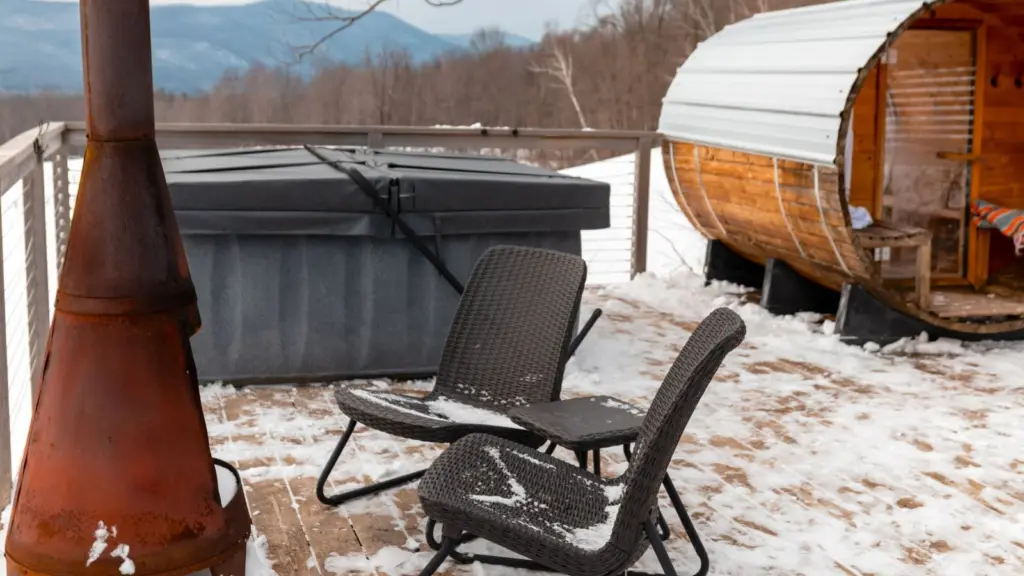
- Chiminea. A wood fire burns inside a clay body; air enters through the front mouth and the chimney draws the smoke up. The clay walls soak up the fire’s heat and radiate it steadily outward, and they keep radiating for a while after the flames die down. If you are new to the idea, our explainer on what a chiminea is and how it works covers the basics.
Which one feels warmer?
A patio heater gives even, predictable warmth across a defined circle, and you can turn it up or down. A chiminea’s heat is directional: it pours out of the front opening, so people sit in a half circle facing it, and the clay body adds a gentle, steady warmth of its own. It will comfortably warm the people sitting in front of it; it will not heat a large, open yard. For a small patio and a few friends around the fire, that is usually exactly the right amount.
Setup, fuel and daily use
- Patio heater: assemble, connect the tank or plug it in, and it is ready. Propane tanks have to be refilled or swapped; electric models need an outdoor-rated outlet nearby.
- Chiminea: it needs a one-time curing with a few small fires before regular use, a bed of sand in the bottom, and dry, seasoned firewood. Each evening you light it, feed it a few pieces at a time and let it burn out on its own. Our guide on what to burn in a chiminea covers wood, charcoal and cutting the smoke.
Smoke and smell
A patio heater makes no wood smoke at all. A chiminea burns wood, so it does make smoke, and anyone who tells you otherwise is not being straight with you. What the chimney does is lift that smoke above head height instead of into your guests’ eyes, and with dry hardwood and small loads there is not much of it. If you have close neighbors or a strict HOA, check the local burn rules before you choose a wood fire of any kind.
Covered patio, porch or pergola?
This is the deciding question for many people. A chiminea must have open sky above the chimney: no roof, no eaves, no pergola, no low branches. That rules it out for a covered patio or a screened porch.
Some patio heaters, especially electric infrared ones, are designed for covered outdoor spaces, but the clearances are set by each manufacturer, so follow the manual for yours. Never run a propane heater inside an enclosed room or garage. If your patio is open to the sky, see our guide on where to place a chiminea for safe spots on a patio, deck or in the yard.
Safety around kids and pets
Both get hot. A patio heater’s hot parts are usually up high, but a tall heater can tip, so check whether your model shuts off when it is knocked over and anchor it on windy days. A chiminea keeps flames and embers behind clay walls and its wide bowl keeps sparks inside, but the outside of the clay gets hot while the fire burns. Set it on a non-combustible base, keep children and pets back from it, and never throw water on hot clay to put it out.
Running costs
We will not quote numbers, because propane, electricity and firewood prices vary a lot by region and season. What is fair to say: a propane heater costs you gas every hour it runs, an electric heater costs you electricity, and a chiminea costs you firewood. If you have a cheap or free source of seasoned wood, the chiminea is hard to beat. A chiminea also has no burner, igniter or cord to wear out; the clay needs sensible care instead, above all shelter from freezing weather in winter.
Atmosphere and looks
A patio heater is a tool: effective, but nobody gathers around it. A chiminea is a real fire in a piece of pottery, and it looks good even unlit, in daylight. If the evening itself is the point, a fire, a crackle, a little cooking over the embers, the chiminea wins that one clearly. If you are also weighing an open fire pit, we compared those two separately in chiminea vs fire pit.
The verdict
- Covered patio, porch or restaurant terrace, heat on demand: a patio heater rated for that space.
- Open patio or backyard, evenings with friends, you like a real fire: a chiminea, the wood-burning patio heater with its own chimney.
- Big open yard and a crowd: neither is ideal alone; that is fire pit territory.
Our own clay chimineas are handmade from 100% natural clay: 34 in (87 cm) tall on the included tripod stand, 38–44 lbs, with a protective lid, in a red or blue ornamented version. They are currently sold out in the US, so the product pages are there for specs and reference prices. Whatever you choose, pick the heater that fits your patio, not the other way around.
Is a chiminea good for heat?
Yes, for the people sitting in front of it. Warmth comes out of the front opening and the fired clay radiates steady heat that lasts after the flames die down. It won’t heat a large open yard.
Can you use a chiminea on a covered patio?
No. A chiminea needs open sky above the chimney: no roof, eaves, pergola or branches. For covered spaces, look at heaters the manufacturer rates for that use.
Is a chiminea cheaper to run than a propane patio heater?
It depends on what firewood and propane cost where you live. A chiminea burns ordinary seasoned firewood; a propane heater needs its tank refilled or swapped.
Is there a wood-burning patio heater?
A chiminea is the classic one: a wood-burning outdoor heater with its own chimney, which lifts the smoke above head height.