How Hot Does a Clay Chiminea Get? Heat, Safety and Limits
Our clay chimineas are made of fired clay rated for 500-600°C (932-1112°F). That’s the material’s limit, not a thermometer reading of your fire, and it’s the reason the fire should stay moderate: flames inside the bowl, never pouring out of the opening or the chimney. The outside wall gets hot enough to burn skin, and the clay holds that heat long after the flames die down.
“How hot does a chiminea get?” is really three questions: how hot the fire is, how hot the clay gets, and how hot it feels where you’re sitting. We’ll answer each honestly, including what we don’t measure.
What does the 500-600°C (932-1112°F) rating mean?
It’s the temperature range the fired clay of our chimineas is made to withstand. Clay is kiln-fired, which turns it into ceramic, and that ceramic takes the heat of an ordinary wood fire built on a layer of sand in the bottom. What it doesn’t take well is sudden change: a huge fire in a cold chiminea, water on hot clay, or frost in damp clay. Most serious cracks come from those, not from normal evenings.
We don’t publish a measured temperature for the inside of the bowl or the outside of the wall, because it depends on the wood, the amount, the wind and how long the fire has been burning. Anyone who gives one exact number for “a chiminea” is guessing.
Why is the outside off-limits while it is lit?
Because it gets hot enough to burn. The clay walls take in the fire’s heat and give it back gradually, which is exactly why a chiminea feels warm, and also why the outside, the chimney and the metal stand are not to be touched while it’s in use or cooling down. Treat the whole chiminea like a hot stove:
- no leaning on it, no hanging towels or gloves on it, no drinks set on the rim;
- keep children and pets back from it, with a clear walkway between the chairs and the clay;
- never move it while it’s warm; wait until it’s completely cold, ideally the next day.
How big should the fire be?
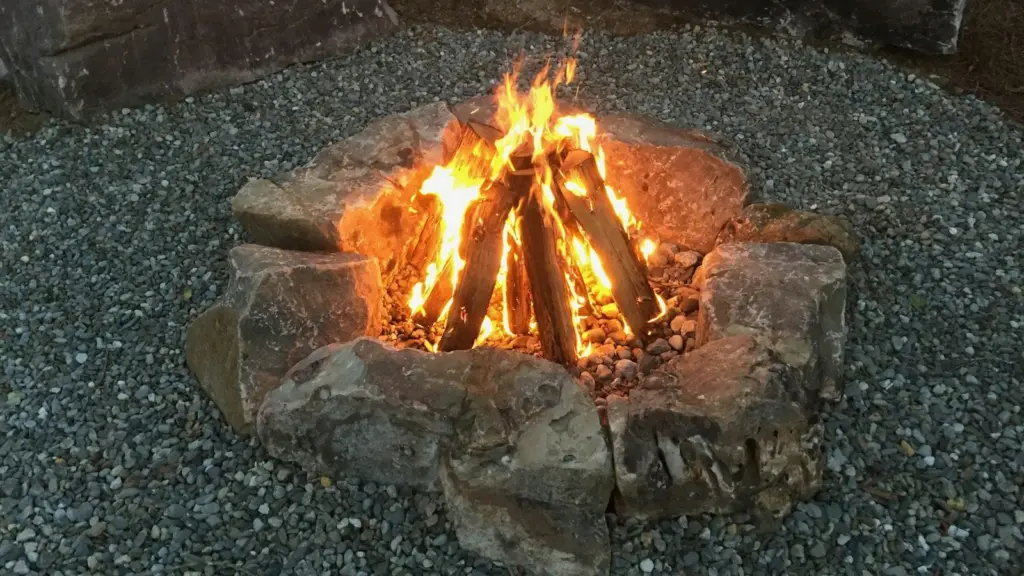
Moderate. The simplest gauge is the flame: it stays inside the bowl. If flames come out of the front opening or the top of the chimney, the fire is too big, for the clay and for anything around it. Add wood a piece or two at a time as it burns down, never a full load. Seasoned hardwood burns hotter and cleaner than damp wood, so you need less of it for the same warmth; see what to burn in a chiminea.
A new chiminea also needs curing before its first real fire: sand in the bottom, then three or four small fires, each a little bigger, with a full cool-down in between. That’s in how to cure a clay chiminea.
How much heat does a chiminea give off?
Enough for the people sitting in front of it. A chiminea throws most of its warmth out of the front opening, and the hot clay radiates steady heat that lasts after the flames die down. It won’t heat a whole open yard, and it isn’t meant to. Seats in a half circle facing the opening, with the back of the chiminea to the wind, get the most from it. For a comparison with gas and electric heaters, see patio heater vs chiminea.
Clay or cast iron: which runs hotter?
They behave differently. Clay warms more slowly than cast iron, but the heat is steadier and lasts longer, because fired clay holds heat. A cast iron chiminea heats up fast and its metal surface gets very hot quickly; it also cools faster. Either way, the outside is not to be touched during use. The full comparison is in clay vs cast iron chiminea.
How far should a chiminea be from things that burn?
At least 6-10 ft (2-3 m) from walls, wooden fences and fabric furniture, on a non-combustible base such as concrete slabs, stone or brick, with open sky above the chimney: no roof, eaves, pergola or branches. Details in where to place a chiminea.
Our chiminea, in short
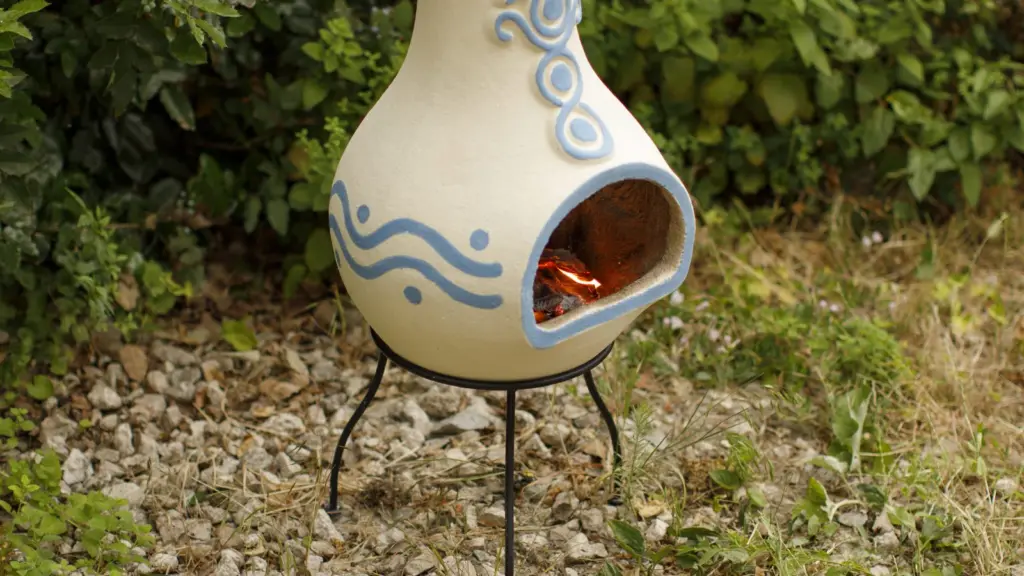
Sparkle Stone chimineas are handmade from 100% natural, kiln-fired clay rated for 500-600°C (932-1112°F). They stand 34 in (87 cm) tall on the included tripod stand, weigh 38-44 lbs and come with a protective lid. See our clay chimineas or the blue ornamented version. They are currently sold out in the US, so the product pages are there for specs and reference prices.
How hot does the outside of a clay chiminea get?
Hot enough to burn skin. Don’t touch the walls, the chimney or the metal stand while it’s lit or cooling, and keep children and pets back.
Does a clay chiminea get as hot as cast iron?
Clay warms more slowly than cast iron, but holds the heat longer and gives it back more evenly. Both get too hot to touch.
How long does a chiminea stay hot after the fire?
Long after the flames are gone: clay holds heat, and embers under the ash can stay hot for hours. Let it cool completely, ideally overnight, before you move it or clean out the ash.
Can a chiminea get too hot?
Yes. A fire with flames coming out of the opening or the chimney is too big. Big fires and sudden temperature changes are what crack clay, so keep the fire moderate and add wood gradually.