
Why Do Clay Chimineas Crack? Causes, Normal Hairlines and How to Prevent Cracks
Almost every serious crack in a clay chiminea comes down to one thing: the clay gets a change that’s too sudden. A big fire before the chiminea is cured. Cold water on hot clay. Water soaked into the material that freezes in winter. A knock while moving it. Fine hairline cracks on the surface are normal on any clay used with an open fire. Cracks that run through the wall can be prevented: a few small fires to start, sand in the bottom, moderate fires, no water on hot clay and dry storage in winter.
Our chiminea care guide covers what to do after every fire and where to keep it in winter. This article is the other half: what is actually happening in the clay when a crack opens, and how to tell a harmless line from a real problem.
What happens in the clay when it cracks
Fired clay expands as it heats up and shrinks as it cools. Heat alone isn’t the issue: our chimineas are rated for 500-600°C (932-1112°F). The issue is difference. When one part of the wall is much hotter than another, the two parts try to move by different amounts, and the material gives way along its weakest line. That’s thermal shock.
The second cause is water. Fired clay is slightly porous and soaks up a little moisture. Water in the pores can turn to steam if a damp chiminea is heated fast, and in winter it freezes and expands. Either way, it pushes on the clay from inside.
The third cause is mechanical: a bump, a fall, or weight where it doesn’t belong. Fired clay is hard, but it doesn’t flex.
The seven usual causes
- A big fire before curing. A new chiminea gets a few small fires first, with a full cool-down in between. A big fire on the first night heats the wall unevenly. The steps are in how to cure a clay chiminea.
- Too much wood at once. Even after curing, a fire packed up to the mouth throws flames straight onto the walls. The right fire is moderate, on the sand bed, fed a few pieces at a time.
- Water on hot clay. A bucket or a hose on a hot chiminea chills one part of the wall in seconds. Let the fire burn down on its own.
- Lighting a wet chiminea. After rain, or after sitting without its lid, the clay and the sand hold water. Give it a few dry days, then start again with a small fire.
- Frost with moisture inside. A damp chiminea left out through freeze-thaw cycles can flake on the surface or open cracks. That’s why it spends winter under a roof; see using a chiminea in winter.
- No sand in the bottom. About 4 in (10 cm) of sand keeps the embers off the base. Without it, the bottom takes the most intense heat directly.
- Knocks, and lifting by the chimney. The chimney is the thinnest part. Move the chiminea only when it’s cold, lifted by the body from the base, and make sure the stand sits level so the body doesn’t tilt.
Hairline or real crack: how to tell
A hairline crack is a thin line, usually in the outer layer or the paint. It doesn’t widen from one fire to the next, and you can’t see firelight through it. Fine surface hairlines can appear over time on any natural clay chiminea used with an open fire. They’re normal and don’t affect safety or function.
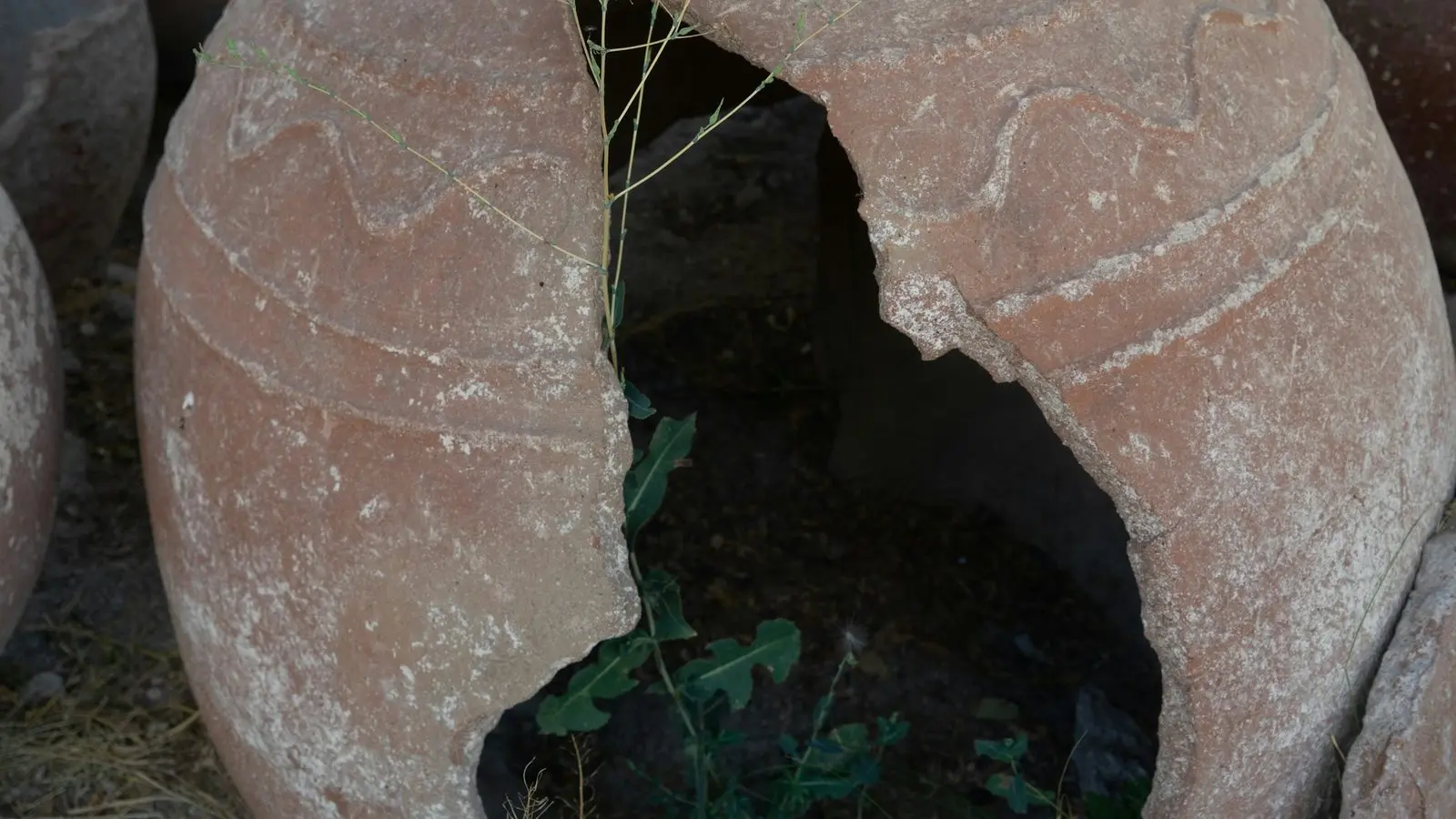
A crack through the wall shows on the inside too, grows wider or longer, or lets firelight through. In that case, don’t light another fire until you know what you’re dealing with. A wall cracked all the way through can give way under heat.
A simple test on a cold chiminea: at dusk, put a flashlight inside, turned on, and look at the line from outside. If the light comes through, the crack goes through the wall.
How to prevent cracks, in short
- Cure a new chiminea with 3-4 small fires, each a little bigger, with a full cool-down in between.
- Keep about 4 in (10 cm) of dry sand in the bottom.
- Burn dry, seasoned hardwood in moderate amounts. See what to burn in a chiminea.
- Put the lid on whenever it’s cold and not in use.
- Never pour water on it, and never light it wet or frozen.
- Store it dry, under a roof, for the winter.
- Make the first fire of every season a small one.
Why temperature differences matter more than the peak temperature is explained in how hot does a clay chiminea get.
What to do if you find a crack
- Let it cool completely and look at it in good light, inside and out.
- Work out which kind it is: fine and stable, or through the wall.
- If it’s a hairline, carry on with moderate fires and check it now and then.
- If it goes through the wall, stop using it for fires. If it’s one of ours and still under warranty, email us a photo.
You’ll find patch products sold for clay and fireplaces. We don’t test or recommend any specific repair, and a crack through the wall is a reason to stop lighting fires in it, not a cosmetic job.
The warranty, in short
Our chimineas carry a 6-month warranty against manufacturing defects. It doesn’t cover cracks caused by incorrect use, such as sudden high-flame fires without the initial curing, mechanical damage from improper handling, or normal wear from exposure to the elements without protection. Fine surface hairlines aren’t treated as defects. Damage on arrival has its own terms. Full details are in our return and warranty policy.
Our chiminea, in short
Sparkle Stone chimineas are handmade in Moldova from 100% natural, kiln-fired clay rated for 500-600°C (932-1112°F). They stand 34 in (87 cm) tall on the included tripod stand and come with a protective lid. See our clay chimineas. They are currently sold out in the US, so the product pages are there for specs and reference prices.
Is it normal for a clay chiminea to have small cracks?
Yes. Fine surface hairlines can appear over time on natural clay used with an open fire. They don’t affect safety or function, and they don’t grow from one fire to the next.
Can you still use a cracked chiminea?
If the crack is a fine, stable hairline, yes, with moderate fires. If it goes through the wall, keeps widening or lets firelight through, stop lighting fires in it.
Does the warranty cover cracks?
Manufacturing defects are covered for 6 months. Cracks from incorrect use, like a big fire without curing, and fine surface hairlines are not.
How do you keep a new chiminea from cracking?
Cure it with 3-4 small fires, each a little bigger than the last, letting it cool completely in between, following the steps in our curing guide, and keep the sand bed in the bottom. After that, keep fires moderate and the clay dry.